




On December 16, 2025, Nepal launched its nationwide tiger census in Sauraha, Chitwan. Over the next three months, 1,100 camera traps will be deployed across five national parks to count every wild Bengal tiger in the country.
This isn’t just a routine survey. It’s a massive conservation effort by one of the world’s poorest countries—and the results tell a remarkable story.
A Conservation Success Story
In 2009, Nepal had just 121 tigers. Today, that number stands at 355—nearly tripling in just 13 years.
The recovery didn’t happen by accident. In 2010, Nepal joined 12 other countries in committing to double its wild tiger population by 2022. While many countries fell short, Nepal exceeded the goal. For a nation with limited resources, this achievement demonstrates extraordinary dedication to wildlife preservation.
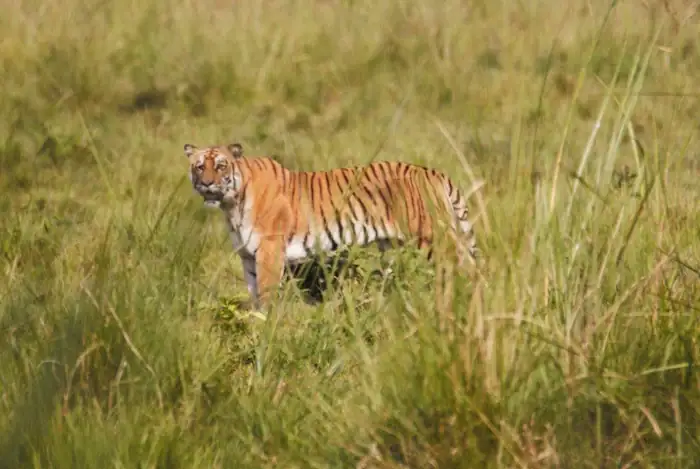
The Real Cost of Conservation
Nepal is one of the poorest countries in the world, with a GDP per capita of around $1,400. Yet the government allocated approximately NPR 30 million (about US$225,000) for this census alone—covering 1,100 camera traps, deployment of 25 technical personnel, and three months of operations across remote wilderness areas.
This doesn’t include the year-round costs: anti-poaching patrols by the Nepali Army, habitat management, community compensation programs, and care for 18 “problematic” tigers currently in captivity. These tigers—animals that entered settlements, injured people or livestock, or were found injured—require daily feeding, veterinary care, and secure enclosures.
For perspective, this census budget could build schools or health clinics. The ongoing conservation program costs far more. Nepal chose tigers anyway.
How the Census Works
The methodology is sophisticated. Motion-activated camera traps photograph tigers at strategic locations across Chitwan, Parsa, Banke, Bardia, and Shuklaphanta National Parks. Each tiger has unique stripe patterns—like human fingerprints—allowing researchers to identify and count individual animals.
Twenty-five technical personnel from the Department of National Parks and Wildlife Conservation (DNPWC) lead the effort, supported by the Nepali Army, buffer zone communities, and forest user committees. Technical expertise comes from the National Trust for Nature Conservation (NTNC), WWF Nepal, and the Geological Society of Nepal.
The census runs from mid-December 2025 through March 2026. Results will be announced on World Tiger Day, July 29, 2026.

The Challenge: Living With Success
Conservation success creates new challenges. With 355 tigers across five national parks, human-wildlife encounters have increased in communities living near forest edges.
Currently, 18 tigers are in captivity because they entered settlements, injured people or livestock, or were found injured. Five are at Central Zoo in Lalitpur, seven at Chitwan National Park, four at Bardia National Park, and one each at Banke and Parsa National Parks. Each animal requires daily care, feeding, veterinary treatment, and secure housing—a significant ongoing expense for the government.
The real cost goes beyond captive tigers. Nepal maintains continuous anti-poaching patrols, habitat corridors, community compensation programs for livestock losses, and alternative livelihood initiatives for forest-edge communities. DNPWC Director General Buddi Sagar Paudel emphasizes that reducing conflict requires giving these communities economic alternatives to forest dependence while promoting coexistence with wildlife.
This is the hidden price of conservation: not just counting tigers, but living alongside them.
Nepal’s Place in Global Tiger Conservation
Globally, 5,357 tigers remain in the wild as of 2025. India leads with 3,167, followed by Russia (750), Indonesia (400), and Nepal (355). Thailand, Bhutan, Malaysia, Bangladesh, Myanmar, China, Vietnam, and Laos account for the remaining populations.
Nepal’s 355 tigers represent just 6.6% of the global population. Yet this achievement is remarkable when you consider the country’s size and resources. Nepal’s entire GDP is smaller than many individual conservation budgets in wealthier nations. The country has made tiger conservation a national priority despite competing needs for infrastructure, healthcare, and education.
This census—happening right now—demonstrates that commitment continues.
Experiencing Conservation Firsthand
Chitwan National Park, home to 128 of Nepal’s tigers, offers a rare opportunity: walking safaris in actual tiger habitat with licensed nature guides.
Tiger sightings aren’t guaranteed—they’re elusive, mostly active at dawn and dusk, and avoid humans. But walking through their territory with an experienced guide offers something jeep safaris don’t: intimate connection with wilderness and direct understanding of what conservation protects.
Guides know animal behavior, read signs (paw prints, scat, territorial markings), and understand safety protocols. Tigers generally avoid humans; most dangerous encounters happen when animals are surprised. Experienced guides make noise while walking, stay alert, and know how to respond if wildlife appears.
Walking safaris typically last 3-4 hours through sal forests, grasslands, and riverbanks. You’ll likely see one-horned rhinoceros, spotted deer, wild boar, hundreds of bird species, and crocodiles. You’ll definitely see signs of tigers—even if the tigers themselves remain hidden.
Tourism’s Role in Conservation
When tourists visit Chitwan, park fees fund protection, anti-poaching patrols, and community programs. Tourism creates jobs for guides, lodge staff, and communities—demonstrating that living tigers have economic value and reducing dependence on forest resources.
This is conservation’s economic equation: wildlife pays its way by attracting visitors who support both protection efforts and local livelihoods.
What This Census Means
Results will be announced on World Tiger Day 2026. If the trend continues, Nepal will have further established itself as a model for wildlife conservation in developing nations.
But the real story isn’t just the numbers. It’s what Nepal sacrifices to achieve them.
Every rupee spent on camera traps, patrols, and tiger care is a rupee not spent on roads, schools, or hospitals. Every forest corridor protected is land not available for agriculture or development. Every community living near tiger habitat accepts risk and economic limitations that wealthier nations would never tolerate.
Nepal’s tiger census isn’t just counting animals. It’s demonstrating a national commitment to sharing the planet with other species—even when it’s expensive, complicated, and sometimes dangerous.
For a poor country to prioritize wildlife this way shows what’s possible when conservation becomes a matter of national pride and identity rather than just policy.
Amazing Kathmandu Tours offers multi-day Chitwan safari packages combining wildlife experiences with cultural immersion, led by licensed professional guides. Contact us to learn more about visiting Chitwan National Park and supporting Nepal’s conservation efforts.
Amazing Kathmandu Tours is committed to responsible tourism that supports wildlife conservation and local communities throughout Nepal.
