



October 17, 2026 — Manaslu and Tsum Valley remain closed, alternative trekking options available
This page is updated daily with the latest information on road access, trekking routes, flights and tourist destinations affected by the August 26 Nepal flood. (see all updates on Reddit)
Manaslu / Gorkha — Circuit and Tsum Valley still closed: An October 17 route update confirms that the Manaslu Circuit and Tsum Valley remain closed following the October 11 Budhi Gandaki flash flood. Bridges near Dobhan and Philim were destroyed, leaving the normal trekking approach impassable. No official reopening date has been announced. Trekkers should not start either route until local authorities confirm safe access. Source: Himalayan360, October 17.
Manaslu permits — Annapurna alternative: Travellers holding Manaslu trekking permits may be able to use them for a single entry into the Annapurna Conservation Area instead, according to the latest trekking operator update. Anyone considering this alternative should confirm the arrangement with the permit authorities and their trekking agency before changing plans. Source: Himalayan360, October 17.
Weather / High-altitude trekking — Rain and snowfall possible today: Nepal’s Department of Hydrology and Meteorology forecasts isolated light rain and snowfall, potentially accompanied by thunderstorms, in parts of the Koshi, Bagmati and Gandaki Himalayan regions. Trekkers in the Everest, Langtang and Annapurna regions should check local forecasts before high-altitude crossings. Source: Nepal News, October 17.
Langtang / Rasuwa — Road access improving, but not fully normal: An operator update dated October 15 reports that the road to Dhunche and Syabrubesi is open again. However, accommodation and trekking access remain disrupted in parts of the region. The alternative route from Dhunche towards Langtang, reported yesterday, remains an option subject to local confirmation. Source: The Everest Holiday, updated October 15.
Rasuwagadhi / Nepal–China border: The overland crossing towards Kerung remains disrupted. No confirmed reopening was found in today’s reports. Source: Swotah Travel, October 17.
Manang / Annapurna Circuit: Vehicle access towards Chame and Upper Manang has improved following temporary bridge repairs. A trekking operator’s October 15 update also reports that the Besisahar–Chame road is open again. Travellers should continue checking restrictions on temporary crossings. Source: The Everest Holiday.
Beni–Jomsom / Mustang: The same October 15 operator update reports that the road has reopened to vehicles. Earlier police reports still identified one-way restrictions at Baisari, so unrestricted two-way access has not been independently confirmed. Source: The Everest Holiday.
Kathmandu–Pokhara / Kathmandu–Chitwan: No new complete closure of the Prithvi Highway or Narayangadh–Mugling route was confirmed in today’s checked reports. Both routes have experienced earlier flood damage, and conditions should be verified before departure.
Domestic flights: No significant new disruption affecting the main tourist flight routes was confirmed in today’s checked reports.
Road and trekking conditions can still change quickly during the monsoon, so confirm your specific route before departure.
A serious note before you go anywhere near the affected region:
Do not take this post, any blog post, or especially any TikTok, Instagram or YouTube video as your final word on road conditions.
Check. Check again. Check a third time. Conditions on the ground are changing quickly, and outdated information, including this post a week from now, can get you stuck somewhere with no way out.
Before you travel:
Check with us, or with whatever licensed travel agency or guide is responsible for your trip, before you commit to any route.
If your plans involve Rasuwa, Nuwakot, Syabrubesi, Rasuwagadhi or the Tibet border, check the exact route immediately before departure.
The normal Pasang Lhamu Highway corridor remains blocked. A single-lane dirt alternative towards Syabrubesi is available, but road conditions and restrictions can change quickly. Beyond Syabrubesi towards Rasuwagadhi, major sections remain severely damaged. Nepal News
You are of course free to travel independently, on your own, without anyone knowing your exact whereabouts. That’s your call to make.
But we strongly advise against doing that in the affected areas right now.
If something goes wrong, a road closes behind you, a landslide blocks the way forward, you need evacuation or updated routing, a tour operator or guide can act on your behalf immediately.
Travelling solo with no one tracking your itinerary means nobody may know you need help until you are overdue, and in this kind of environment that delay matters.
Use a licensed tour operator or guide in the affected areas. They exist for exactly this kind of situation.
Social media is not a source. A stranger’s video from three days ago is not a source.
Check with people who are actually on the ground and with authorities such as the Nepal Tourism Board (NTB) and the Trekking Agencies’ Association of Nepal (TAAN).
If you are seeing international headlines saying “Nepal is flooded,” that is misleading.
The severe disruption is concentrated in specific affected corridors, not the whole country.
Major tourist destinations including Kathmandu, Pokhara and Chitwan remain open, but heavy rain and new landslides are currently disrupting road and air access to several destinations. The Prithvi Highway, which reopened at Krishnabhir on September 17, is blocked again today following new landslides. Nepal News
What happened
On the morning of August 26, 2026, a catastrophic flash flood swept down the Bhote Koshi and Trishuli river corridors in northern Nepal, triggered by a glacial collapse near the Nepal–Tibet border. The flood hit Rasuwa district hardest and caused damage downstream through Nuwakot, Dhading and parts of Gorkha and Chitwan. It is a serious disaster, with significant loss of life and communities still cut off in the worst-affected areas, and our thoughts are with everyone affected.
If you are seeing international headlines saying “Nepal is flooded,” that is misleading. This event was concentrated in specific northern river corridors, not the whole country. Most of Nepal’s tourist areas are completely outside the affected zone and are operating normally.
Flying: currently affected by bad weather
Tribhuvan International Airport in Kathmandu is open, but domestic flights are being disrupted by poor weather and reduced visibility today. Flights could not operate from Bharatpur, Pokhara, Lukla, Simara and Surkhet airports this morning. Some scheduled flights may be cancelled, delayed or rescheduled as conditions change. International operations at Tribhuvan International Airport continue. Check directly with your airline before travelling to the airport. Kathmandu Post
Land travel: what’s actually affected
This is where the real disruption is, and it’s concentrated north of Kathmandu:
Kathmandu–Dhading road (Chisapani, Chandragiri): reopened to one-way traffic on September 4 after a landslide was cleared. This isn’t a route most tourists use, included here for completeness.
Rasuwa and Nuwakot districts: the normal Pasang Lhamu Highway corridor remains severely disrupted. The main corridor towards Rasuwagadhi remains blocked. A single-lane dirt alternative towards Syabrubesi is operating via Tokha, Chhahare, Bidur, Nuwakot Durbar, Kalikasthan, Ramche and Dhunche. Travellers should check the exact route immediately before departure. Nepal News
Rasuwagadhi border crossing to Tibet (Kerung): normal overland access remains severely disrupted. The road from Syabrubesi towards Rasuwagadhi suffered extensive damage in the August flood, and the main routes towards Rasuwagadhi remain blocked. Overland travel towards Rasuwagadhi/Kerung should not be treated as operating normally. Nepal News
Langtang, Gosaikunda, Tamang Heritage Trail, Helambu Circuit and Ruby Valley: conditions differ by route. Langtang Valley and Gosaikunda are reported safe for trekking, but normal access through Rasuwa remains disrupted. A single-lane alternative road towards Syabrubesi is available. Helambu remains open and can be used as an alternative approach to Gosaikunda. Ruby Valley is also reported safe, with alternative access via Dhadingbesi or Arughat. The Tamang Heritage Trail remains the most affected of these routes and should not currently be treated as operating normally. Always confirm the exact route and trailhead access before departure.
Araniko Highway: sections near Bhotekoshi and Liping remain disrupted.
Prithvi Highway, Krishnabhir section (Dhading): after reopening on September 17, fresh landslides have blocked the highway again today. The road is completely blocked at Krishnabhir and Tigrang Khola, while traffic is operating one-way at Parewabhir, Jyamireghat, Jahare, Jawang Khola and Kamerebhir. Road crews are working to clear the debris, but continuing rainfall and further landslides are making this difficult. Nepal News
Areas at risk, but not closed: downstream districts below the flooded corridor remain under alert even though they weren’t directly hit, conditions there can still change quickly. Nuwakot, Dhading, Gorkha and Chitwan are the districts to watch. (Source: ExplorersWeb, citing Kathmandu-based trekking agency Nepal Peak Adventure.)
Pokhara
Kathmandu to Pokhara
Pokhara itself is fully open. Lakeside, paragliding, boating and hotels are all operating normally.
Road access from Kathmandu is disrupted again today. Fresh landslides have blocked the Prithvi Highway at Krishnabhir and Tigrang Khola, while five other locations in Dhading are restricted to one-way traffic. Do not currently assume that the normal Kathmandu–Pokhara road journey is operating. Check the highway status immediately before departure. Nepal News
Kathmandu–Pokhara flights:
Flights are also being affected by today’s poor weather and low visibility. Pokhara airport was unable to operate normally this morning, and flights may be delayed, cancelled or rescheduled as conditions change. Check directly with your airline before travelling to the airport. Kathmandu Post
Book a flight: Buddha Air · Yeti Airlines · Shree Airlines
Which Nepalese Airline Should You Choose?
Chitwan
Chitwan National Park, the safaris and the lodges are all operating normally.
Road access from Kathmandu is disrupted today. The Prithvi Highway is blocked by fresh landslides in Dhading, while the Narayangadh–Mugling road has also been closed until further notice because of landslides and the risk of further incidents following continuous rain. Do not currently assume that the normal Kathmandu–Chitwan road journey is operating. Kathmandu Post
Kathmandu–Bharatpur flights: Bharatpur airport was unable to operate normally this morning because of poor weather and reduced visibility. Flights may be delayed, cancelled or rescheduled as conditions change. Check directly with your airline before travelling to the airport. Kathmandu Post
Book a flight: Buddha Air · Yeti Airlines · Shree Airlines
Which Nepalese Airline Should You Choose?
Kathmandu Valley
The flood did not reach the valley. Heritage sites, hotels and city tours are running as usual.
Heavy rain is, however, disrupting several highways connecting Kathmandu with other parts of Nepal. Public vehicles to and from Kathmandu have been put on hold because of highway obstructions. Nepal News
Everest region
An entirely separate drainage system, zero impact from the August 26 flood. EBC and Three Passes treks themselves are unaffected.
However, flights to Lukla are being disrupted by today’s poor weather and low visibility. Lukla airport was unable to operate normally this morning, so travellers should check their flight status directly with the airline before departure. Kathmandu Post
Annapurna Circuit and Annapurna Base Camp
The trekking region itself is unaffected. From Pokhara, the normal local road connections to trailheads for Ghorepani Poon Hill, Annapurna Base Camp (ABC), Mardi Himal and other Annapurna treks remain available.
However, transport from Kathmandu towards Pokhara is disrupted today. Fresh landslides have blocked the Prithvi Highway at Krishnabhir and Tigrang Khola, and poor visibility is also affecting flights to Pokhara. Travellers heading towards the Annapurna region should check both road and flight conditions immediately before departure. Nepal News
Practical advice if you’re traveling in Nepal now
If your route runs through Rasuwa, Nuwakot, Syabrubesi, Rasuwagadhi or towards the Tibet border: check the exact road situation immediately before departure. The normal Pasang Lhamu Highway corridor remains blocked. A single-lane dirt alternative towards Syabrubesi is operating, but beyond Syabrubesi severe flood damage remains. Nepal News
For Kathmandu–Pokhara or Kathmandu–Chitwan: do not assume the normal road routes are operating today. The Prithvi Highway is blocked by fresh landslides, and the Narayangadh–Mugling road is also closed until further notice. Domestic flights to Pokhara and Bharatpur are being affected by poor visibility. Check both road and flight status immediately before departure. Kathmandu Post
Confirm your specific route with your guide or hotel the day before you travel. Conditions are changing as repair crews continue working on flood and landslide damage, particularly in the affected northern corridors.
This is still monsoon season, so some landslide-related delays are normal for Nepal at this time of year, independent of the August flood. As the monsoon eases through September, conditions should gradually improve, but heavy rain can still cause temporary road closures, landslides and delays, particularly in mountainous areas.
Nepal Trek Finder — compare 14 treks by duration, altitude, difficulty and culture.
Find Your Trek
FAQ
Are flights to Nepal and within Nepal affected by the flood?
Tribhuvan International Airport remains open, but domestic flights are being affected by poor weather today. Bharatpur, Pokhara, Lukla, Simara and Surkhet airports were unable to operate normally this morning because of poor visibility. Flights may be delayed, cancelled or rescheduled as conditions change. Kathmandu Post
Which roads are closed because of the August 2026 flood?
Several important routes remain disrupted. The Pasang Lhamu Highway towards Rasuwagadhi, the Trishuli–Rasuwagadhi road and the Mailung–Syabrubesi road remain blocked. A single-lane dirt alternative towards Syabrubesi is available, but this should not be confused with the normal highway having reopened. Nepal News
There is also a new weather-related disruption today. The Prithvi Highway is completely blocked at Krishnabhir and Tigrang Khola, with one-way traffic at five other locations in Dhading. The Narayangadh–Mugling road towards Chitwan is also closed until further notice because of landslides and continuing heavy rain. Nepal News
Which trekking areas are currently affected?
Conditions differ by region. Langtang Valley and Gosaikunda themselves are reported safe, but their normal road access through Rasuwa remains disrupted. A single-lane alternative route towards Syabrubesi is available, but travellers should confirm the exact road and trailhead situation immediately before departure.
Helambu remains open and can provide an alternative trekking approach towards Gosaikunda. Ruby Valley is also reported safe, with alternative approaches via Dhadingbesi or Arughat.
The Tamang Heritage Trail should not currently be treated as operating normally because of the disruption around Syabrubesi.
The Manaslu trekking route has reopened following the September 6 flooding near Namrung. An alternative trail and temporary wooden bridge have restored pedestrian access, and trekkers can again continue towards Samagaon and Larkya Pass.
Always confirm your exact trek and trailhead access before departure.
Can I still travel to Pokhara, Chitwan, Everest and Annapurna?
Yes. Pokhara, Chitwan, Everest and the Annapurna trekking region themselves remain open. However, transport is disrupted today. Fresh landslides have blocked the Prithvi Highway and the Narayangadh–Mugling road, while poor visibility is disrupting domestic flights to Pokhara, Bharatpur and Lukla. Check the current road or flight status immediately before travelling. Kathmandu Post
Is Kathmandu Valley safe to visit right now?
Yes. The August 26 flood did not reach Kathmandu Valley. Heritage sites, hotels and city tours are operating normally.
Heavy rain is currently affecting several roads connecting Kathmandu with other parts of Nepal, so this does not mean that overland travel from Kathmandu is operating normally today. Nepal News
Domestic carriers flying Kathmandu–Pokhara and Kathmandu–Bharatpur (Chitwan):
Buddha Air: https://www.buddhaair.com/
Yeti Airlines: https://www.yetiairlines.com/
Shree Airlines: https://www.shreeairlines.com/
Which Nepalese Airline Should You Choose?
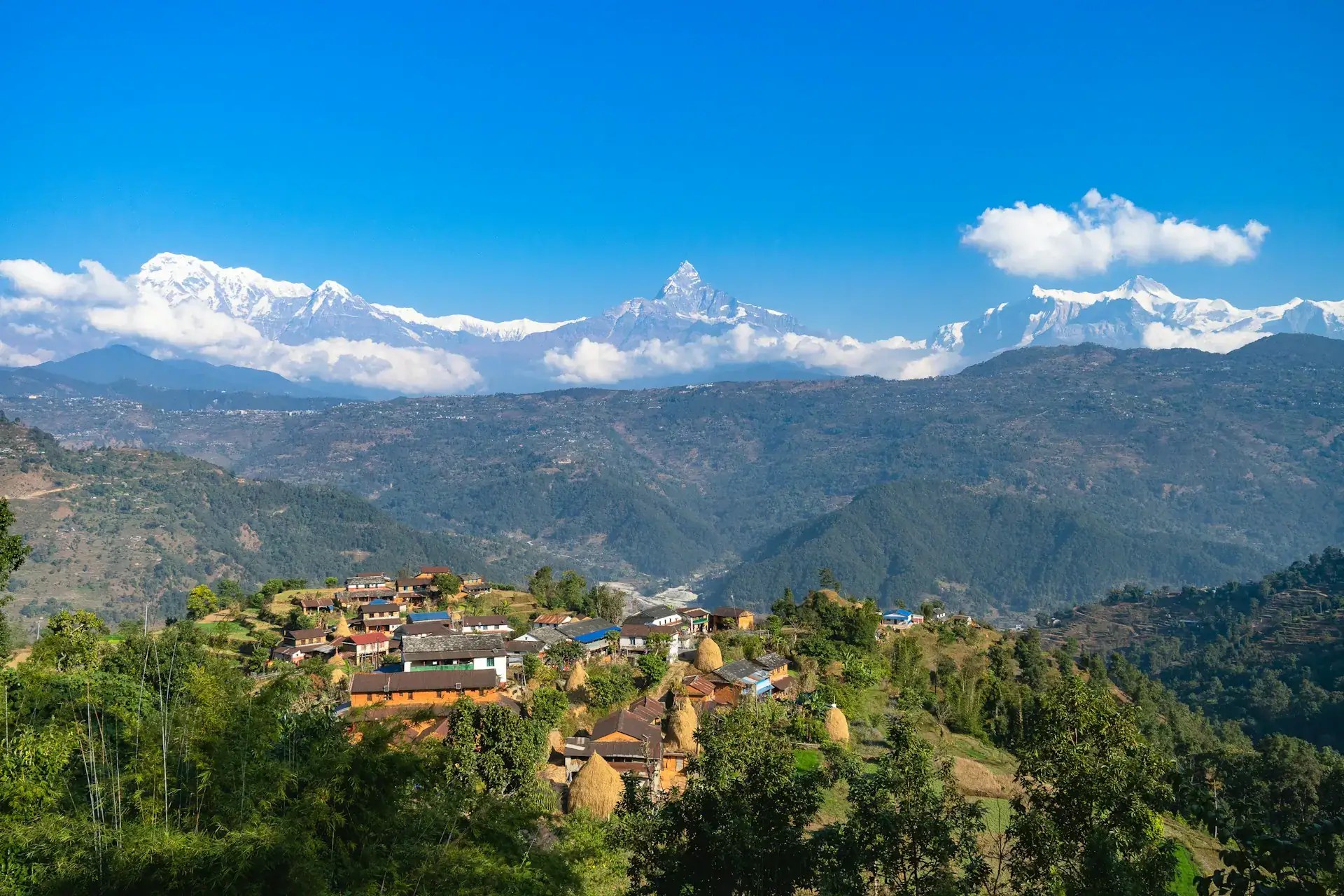
Photo Village near Pokhara, with Mount Fishtail in the background, by Martin Skřivánek on Unsplash
Sources:
U.S. Embassy Nepal travel alerts: https://np.usembassy.gov/natural-disaster-alert-continued-flood-and-landslide-risk/
Nepal Department of Roads (official site): https://www.dor.gov.np/
Nepal Ministry of Foreign Affairs — flash flood updates: https://mofa.gov.np/category/flashflood/
Donate to the Government of Nepal Prime Minister’s Disaster Relief Fund https://pmdrf.nchl.com.np/


1 thought on “Nepal Flood August 2026: Daily Travel Update for Tourists”