



Ask this question on any Nepal travel forum and you’ll get a flood of replies within minutes, this is one of the most searched, most argued-about topics for anyone planning a trip here.
The reason it comes up so often isn’t really about comfort or price, it’s about safety. Most travelers arrive already having read a headline about a crash, and that colors every question that follows: is domestic flying actually dangerous, or does one bad year get repeated in every blog post for a decade afterward?
People also ask a lot about the aircraft itself, turboprop versus jet, how old the fleet is, whether smaller planes on mountain routes are riskier than the ones flying between major cities. Weather comes up constantly too, since flights to places like Lukla and Jomsom get cancelled or delayed for days when cloud cover rolls in, and travelers want to know which airline handles that most predictably rather than which one simply promises the fewest delays.
Punctuality is its own recurring complaint, short-haul domestic routes in Nepal are notorious for schedule slippage.
Buddha Air
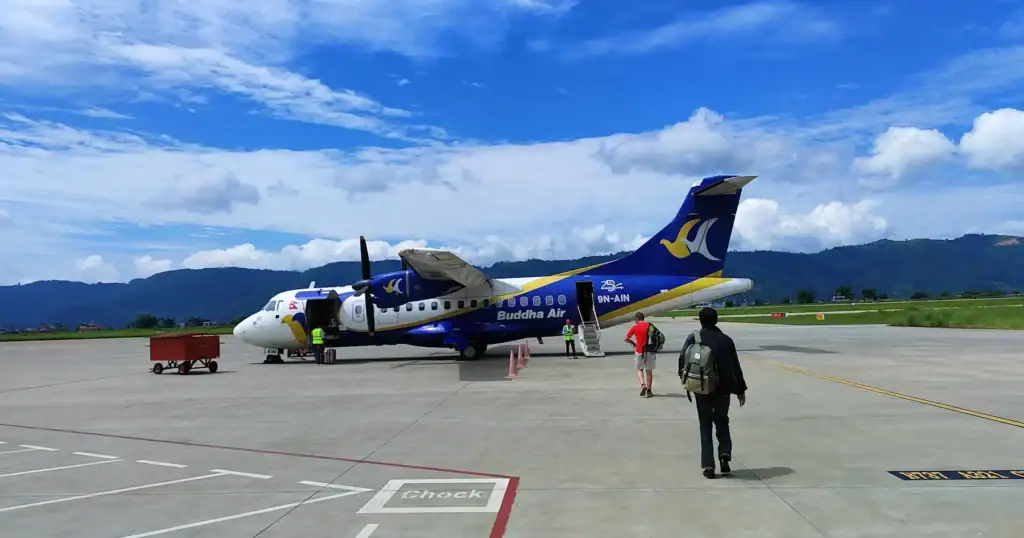
Established in 1997, Buddha Air operates ATR 72-500 and Beechcraft 1900D aircraft and is one of Nepal’s largest domestic carriers by route count. It’s a common choice for Kathmandu–Pokhara and Kathmandu–Bharatpur (Chitwan), and is generally regarded as punctual with solid ground service. One thing worth knowing: Buddha Air has its own repair and maintenance building right at Kathmandu airport, officially approved by Nepal’s aviation authority. That means big maintenance jobs on their planes happen right there in Kathmandu. Buddha Air itself says it’s the only Nepali airline with this kind of setup. buddhaair.com
Yeti Airlines
Founded in 1998, Yeti Airlines is Nepal’s second-largest domestic carrier by passengers carried and has been registered with IATA’s Standard Safety Assessment (ISSA) program since 2016. Yeti has also been Nepal’s first carbon-neutral airline since 2019. It owns Tara Air, which handles the short mountain runways like Lukla and Jomsom. yetiairlines.com
Shree Airlines
Founded in the 1990s (originally as Air Ananya), Shree Airlines began fixed-wing passenger service in 2017 with CRJ jets and has since shifted its fleet: as of January 2026, it has fully retired its CRJ-700s (the last one sold and flown to the US), and now operates Bombardier CRJ-200s alongside Dash 8 Q400 turboprops as its main aircraft. It’s the third-largest domestic carrier in Nepal by passengers and second-largest by fleet size (2024 figures), flying Kathmandu–Pokhara alongside routes to Nepalgunj, Dhangadhi and Bhadrapur. shreeairlines.com
Nepal Airlines
The national flag carrier, generally considered safe on its major domestic routes, and the only one that also flies international. It has restarted a number of domestic routes after a period of reduced service, but Buddha Air, Yeti and Shree fly the main tourist routes more frequently. nepalairlines.com.np
Tara Air and Summit Air (for Lukla and Jomsom)
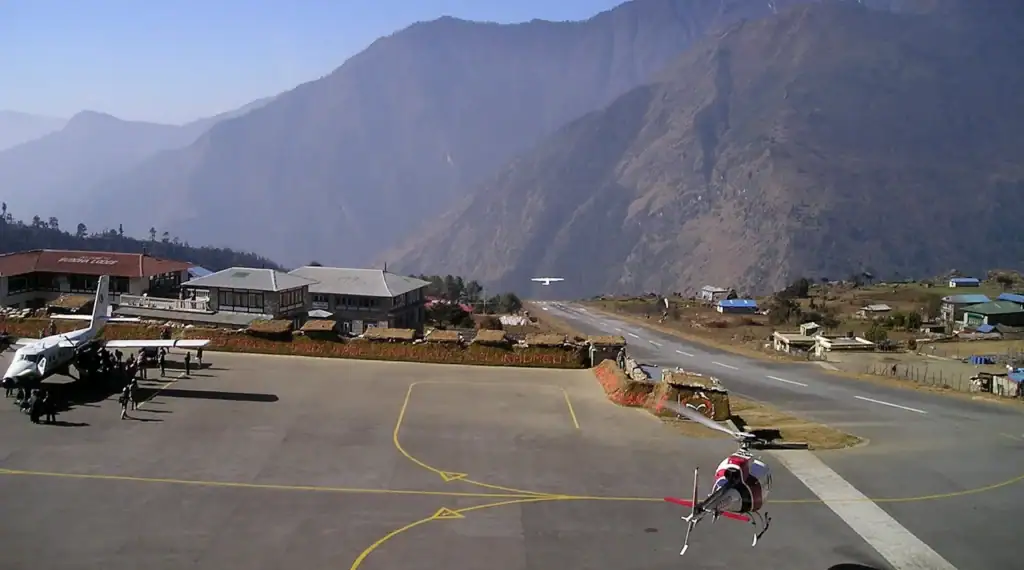
If you’re heading to Everest Base Camp or Upper Mustang, these are the two carriers actually flying the short, technical STOL runways at Lukla and Jomsom. During peak trekking season, most Lukla flights operate out of Manthali/Ramechhap airport, about 4–5 hours by road from Kathmandu, rather than from Kathmandu itself, so build that into your schedule. taraair.com · summitair.com.np
Turboprop or jet, does it matter?
A turboprop (like the ATR 72 or Dash 8 Q400) has propellers driven by jet engines, while a regional jet (like the CRJ) has no propellers at all, just the engines pushing air straight out the back. On Nepal’s short domestic hops, the practical differences are smaller than people expect, but here’s what actually changes:
- Noise and vibration: turboprops are louder and you’ll feel more vibration, especially near the propellers. Jets are quieter and smoother.
- Speed: barely matters here. Flights like Kathmandu–Pokhara take 25–30 minutes either way, turboprops aren’t slow enough on a route this short for it to be noticeable.
- Altitude and mountain views: turboprops generally fly a bit lower than jets, which can actually mean better close-up mountain views on a clear day, not a downside.
- Landing on short or high-altitude runways: this is the real reason turboprops dominate Nepal’s domestic network. Turboprops need much shorter runways and perform better at high altitude, which is exactly why every flight to Lukla, Jomsom and similar mountain airstrips is on a small turboprop (or even smaller STOL aircraft), never a jet. Jets only make sense on Nepal’s longer, flatter routes with proper runways, like some of the Terai destinations.
Bottom line: don’t pick your airline based on turboprop versus jet for a short hop like Kathmandu–Pokhara, the difference in your actual trip is mostly noise and a slightly smoother ride on the jet, not safety or speed.
Weather: the thing that actually disrupts your trip
This matters more than which airline you pick. Nepal’s domestic network runs almost entirely on visual flight rules, not instrument landing systems, which means pilots need to actually see the terrain and runway to fly and land, no clear line of sight, no flight.
Mountain routes like Lukla, Jomsom and Phaplu are the most affected, since morning cloud can build fast and shut a route down for hours, sometimes days, especially outside the clearer pre-monsoon and post-monsoon windows (roughly March–May and late September–November). Kathmandu–Pokhara and Kathmandu–Bharatpur see far fewer weather cancellations since they fly over lower terrain, but monsoon season (June–September) still brings delays everywhere. None of this is an airline being unreliable, it’s standard operating procedure and the airlines that cancel readily when conditions are borderline are the ones actually taking safety seriously. Build at least one buffer day into any itinerary that depends on a mountain flight and don’t book an international connection for the same day you fly out of Lukla.
Which terminal, and what the airport experience is actually like
Tribhuvan International Airport (Kathmandu) has a separate Domestic Terminal from the international one, different building, different entrance, and you’ll need to know which one your driver or hotel shuttle is dropping you at. During peak trekking seasons (roughly March–May and September–November), most Lukla flights don’t depart from Kathmandu at all, they run from Manthali/Ramechhap Airport instead, about 4–5 hours by road from Kathmandu, to reduce congestion at the main airport. If you’re booked on a Lukla flight in peak season, confirm which airport you’re actually departing from before you plan your morning. Regional airports like Pokhara, Bharatpur and Bhairahawa each have a single small terminal handling both arrivals and departures, nothing like the scale of an international hub.

Baggage and what to expect if you’re used to Western air travel
A few things catch Western travelers off guard here. Standard domestic routes (Kathmandu–Pokhara, Kathmandu–Bharatpur) typically allow 15–25kg checked and 5kg cabin baggage depending on airline and fare, but mountain flights to Lukla, Jomsom and similar airstrips cut that down hard, often to around 10kg checked plus 5kg cabin, because the aircraft themselves are small and every kilo affects the flight’s payload at high-altitude airstrips.
Excess baggage is common and simple to deal with: staff weigh your bag at the counter, calculate the extra charge (roughly USD 1 per kg on standard routes, more on mountain routes) and you pay in cash or sometimes card on the spot, there’s no online pre-purchase system like you’d expect from a Western carrier.
Boarding tends to be less formal too: don’t expect assigned seating, jet bridges, or the layered security process of a major international airport, it’s closer to a regional bus terminal in pace, with staff calling flights and groups walking out to the aircraft on the tarmac.
Schedules also shift same-day more than Western travelers are used to, a flight can be brought forward, delayed, or consolidated with another flight at short notice, so stay near the gate area and keep an eye on announcements rather than assuming a fixed departure time.
Which side to sit: left or right?
This one genuinely matters and it’s route-specific, not a fixed rule. Nepal’s domestic aircraft rarely have assigned seating in advance, so get to the gate early and pick your side once boarding starts.
- Kathmandu → Pokhara: sit on the right side for Ganesh Himal, Manaslu, the Annapurna range and Machapuchare. Coming back, Pokhara → Kathmandu, switch to the left side for the same view.
- Kathmandu → Lukla: sit on the left side for the Himalayan range including Everest as you approach. Coming back, Lukla → Kathmandu, switch to the right side.
- Everest Mountain Flight (scenic, no landing): the plane flies northeast then loops back, so the mountains are on the left side on the way out and the right side on the way back, most operators guarantee every passenger a window seat on these flights specifically because of this loop.
None of this is guaranteed, flight path, weather and aircraft type all affect it, but it’s the reliable rule of thumb locals and frequent flyers actually use.
Are the prices really fixed?
Your read is correct. Domestic fares in Nepal don’t move with dynamic pricing the way international tickets do, you’ll see prices hover close to a standard published fare (commonly just over US$100 one-way on routes like Kathmandu–Pokhara) whether you book a month ahead or a few days out. Booking early mainly secures your seat, especially in peak season, rather than saving significant money.
Our take
For Kathmandu–Pokhara or Kathmandu–Bharatpur, choose Buddha Air first. It has the largest domestic route network in Nepal, which means more flight options and easier rebooking if weather cancels your flight, it’s widely reported as the most punctual of the major carriers on short routes, and it runs its own in-house, CAAN-certified maintenance hangar at Kathmandu airport. Yeti Airlines is a solid second choice: comparable schedule, registered with IATA’s ISSA safety program since 2016, and it owns Tara Air, so if your trip also needs a Lukla or Jomsom flight, booking through the same group can simplify things. Shree Airlines is a reasonable third option, though note its fleet has shifted mostly to Dash 8 Q400 turboprops after retiring its larger CRJ-700 jets in early 2026, so it’s no longer the “fly on a jet” pick it once was. For Lukla or Jomsom, you’ll be on Tara Air or Summit Air regardless, those are the operators on those routes.
Book directly
- Buddha Air: buddhaair.com
- Yeti Airlines: yetiairlines.com
- Shree Airlines: shreeairlines.com
- Nepal Airlines: nepalairlines.com.np
- Tara Air: taraair.com
- Summit Air: summitair.com.np
FAQ
Should I care whether my flight is a turboprop or a jet?
Not much, for short routes like Kathmandu–Pokhara. Turboprops are louder and vibrate more, jets are quieter and smoother, but flight time barely changes on a 25-30 minute hop. Turboprops fly a bit lower too, which can mean better mountain views. The real reason turboprops dominate here: shorter runways needed and better high-altitude performance, which is why Lukla and Jomsom flights are always turboprop, never jet.
Which side should I sit on for mountain views: left or right?
Route-specific. Kathmandu → Pokhara: right side (Annapurna, Manaslu); Pokhara → Kathmandu: left side. Kathmandu → Lukla: left side (Everest, the Himalayan range); Lukla → Kathmandu: right side. On the Everest scenic flight, you get both, left on the way out, right on the way back, since the plane loops.
Why do Lukla and other mountain flights get delayed or cancelled so often?
Nepal’s domestic flights rely on visual flight rules, so pilots need clear sightlines to fly and land. Mountain cloud builds fast and can shut a route for hours or days, especially outside the clearer March–May and late September–November windows. It’s standard safety practice, not an unreliable airline, always build in a buffer day.
What’s the baggage limit on Nepal domestic flights?
Around 15–25kg checked plus 5kg cabin on standard routes like Kathmandu–Pokhara, dropping to about 10kg checked plus 5kg cabin on mountain routes like Lukla and Jomsom. Excess baggage is weighed and paid for in cash at the counter, roughly USD 1 per kg.
Which is safer: Buddha Air, Yeti Airlines or Nepal Airlines?
All three currently operate with no open safety concerns. Our recommendation is Buddha Air first, for its route network and punctuality, then Yeti Airlines, registered with IATA’s ISSA safety program since 2016, but that’s based on network size and reliability, not a claim that one is measurably safer.
Are domestic flight prices in Nepal fixed regardless of when you book?
Largely yes. Nepali domestic routes don’t use aggressive dynamic pricing, so prices stay close to a standard published fare whether you book early or late.
Which airline should I take from Kathmandu to Pokhara?
Buddha Air first: largest domestic network, easiest rebooking around weather cancellations, most punctual on short routes, own in-house maintenance hangar. Yeti Airlines is a solid second choice with ISSA registration since 2016. Shree Airlines is a reasonable third option, now mostly Dash 8 Q400 turboprops since retiring its CRJ-700 jets in early 2026.
Which airline flies to Lukla for Everest Base Camp?
Tara Air (a Yeti Airlines subsidiary) and Summit Air. Most Lukla flights depart from Manthali/Ramechhap airport during peak season, not directly from Kathmandu. Tara Air · Summit Air
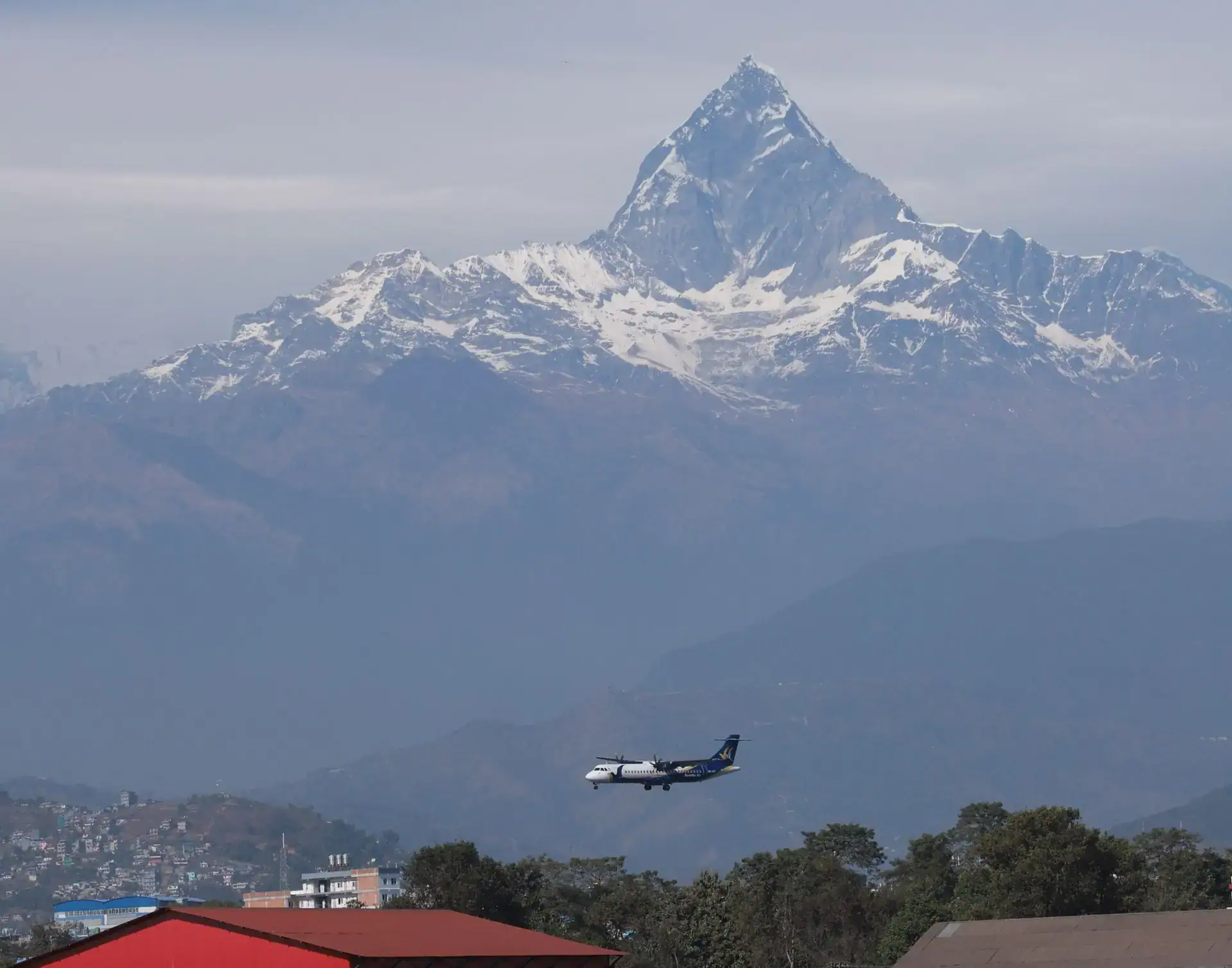
Main photo: Airplane landing in Pokhara, with Mount Fishtail in the background by Bibash Bibson on Pexels.com


1 thought on “Which Nepalese Airline Should You Choose?”