



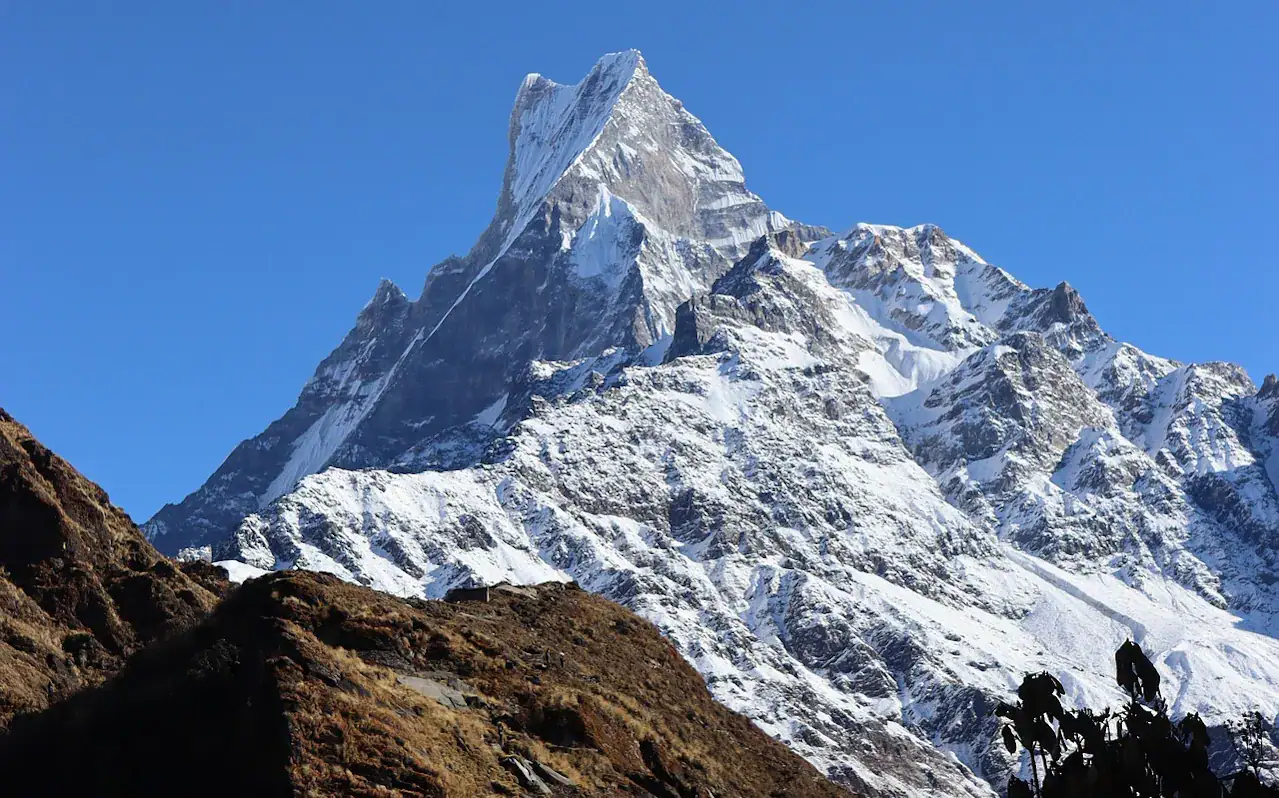
The short answer: October and November give the clearest mountain views and the most stable weather, with March and April as the second-best window. But “best” depends on what you want to do. A trek over a high pass, a week of temples in Kathmandu and a jungle safari in Chitwan each have their own best months. This guide goes through the year month by month, with real rainfall figures, so you can decide for your own dates.
Nepal month by month at a glance
Average temperatures and monthly rainfall for Kathmandu, Pokhara and Chitwan, based on 1991–2020 climate normals.
| Month | Max (day) | Min (night) | Rain per month | Mountain views | Good for |
|---|---|---|---|---|---|
| JanuaryJan | 19 °C67 °F | 3 °C37 °F | 15 mm0.6 in | Often clear, cold mornings | Kathmandu, low treks, Chitwan |
| FebruaryFeb | 22 °C72 °F | 5 °C42 °F | 24 mm0.9 in | Often clear | Kathmandu, low treks, Chitwan |
| MarchMar | 26 °C79 °F | 9 °C48 °F | 38 mm1.5 in | Good, haze building | Trekking, rhododendrons |
| AprilApr | 29 °C83 °F | 12 °C54 °F | 63 mm2.5 in | Often hazy | Trekking, rhododendrons |
| MayMay | 29 °C85 °F | 16 °C61 °F | 129 mm5.1 in | Hazy, afternoon clouds | High treks early in the month |
| JuneJun | 30 °C85 °F | 19 °C67 °F | 241 mm9.5 in | Mostly hidden | Kathmandu culture, green landscapes |
| JulyJul | 29 °C84 °F | 20 °C69 °F | 384 mm15.1 in | Mostly hidden | Kathmandu culture |
| AugustAug | 29 °C84 °F | 20 °C68 °F | 343 mm13.5 in | Mostly hidden | Kathmandu culture |
| SeptemberSep | 29 °C83 °F | 19 °C66 °F | 208 mm8.2 in | Improving late in the month | Late-month treks, fewer crowds |
| OctoberOct | 27 °C81 °F | 14 °C57 °F | 43 mm1.7 in | Clearest of the year | Everything |
| NovemberNov | 24 °C74 °F | 8 °C47 °F | 6 mm0.3 in | Clear and stable | Everything |
| DecemberDec | 20 °C68 °F | 4 °C40 °F | 8 mm0.3 in | Clear, cold | Kathmandu, low and mid treks, Chitwan |
Kathmandu airport, 1,337 m. Climate normals 1991–2020.
| Month | Max (day) | Min (night) | Rain per month | Mountain views | Good for |
|---|---|---|---|---|---|
| JanuaryJan | 20 °C68 °F | 7 °C45 °F | 22 mm0.9 in | Often clear | Lakeside, viewpoints, short treks |
| FebruaryFeb | 23 °C73 °F | 10 °C49 °F | 35 mm1.4 in | Often clear | Lakeside, viewpoints, short treks |
| MarchMar | 27 °C81 °F | 13 °C56 °F | 64 mm2.5 in | Good, haze building | Trekking, rhododendrons |
| AprilApr | 30 °C86 °F | 16 °C61 °F | 142 mm5.6 in | Often hazy | Trekking, rhododendrons |
| MayMay | 30 °C87 °F | 19 °C66 °F | 355 mm14.0 in | Hazy, afternoon clouds | Lakeside, treks early in the month |
| JuneJun | 31 °C87 °F | 21 °C70 °F | 648 mm25.5 in | Mostly hidden | Lakeside, green landscapes |
| JulyJul | 30 °C87 °F | 22 °C72 °F | 941 mm37.0 in | Mostly hidden | Lakeside, green landscapes |
| AugustAug | 30 °C87 °F | 22 °C72 °F | 839 mm33.0 in | Mostly hidden | Lakeside, green landscapes |
| SeptemberSep | 30 °C86 °F | 21 °C70 °F | 635 mm25.0 in | Improving late in the month | Late-month treks |
| OctoberOct | 28 °C82 °F | 17 °C63 °F | 159 mm6.3 in | Clearest of the year | Everything |
| NovemberNov | 24 °C76 °F | 12 °C54 °F | 17 mm0.7 in | Clear and stable | Everything |
| DecemberDec | 21 °C70 °F | 8 °C47 °F | 12 mm0.5 in | Clear | Lakeside, viewpoints, short treks |
Pokhara airport, 827 m. Climate normals 1991–2020.
| Month | Max (day) | Min (night) | Rain per month | Conditions | Good for |
|---|---|---|---|---|---|
| JanuaryJan | 22 °C72 °F | 8 °C47 °F | 18 mm0.7 in | Cool, misty mornings | Wildlife, jungle walks |
| FebruaryFeb | 26 °C79 °F | 10 °C49 °F | 15 mm0.6 in | Mild and dry | Wildlife, jungle walks |
| MarchMar | 32 °C89 °F | 13 °C56 °F | 22 mm0.9 in | Warm and dry | Wildlife, jungle walks |
| AprilApr | 35 °C96 °F | 18 °C64 °F | 56 mm2.2 in | Hot and dry | Wildlife, hot afternoons |
| MayMay | 36 °C97 °F | 22 °C72 °F | 165 mm6.5 in | Very hot, first storms | Wildlife early and late in the day |
| JuneJun | 35 °C95 °F | 25 °C76 °F | 342 mm13.5 in | Hot, humid, monsoon starts | Green landscapes, few visitors |
| JulyJul | 34 °C92 °F | 25 °C78 °F | 573 mm22.6 in | Hot, humid, wettest month | Few visitors; tall grass, wildlife harder to spot |
| AugustAug | 34 °C92 °F | 25 °C78 °F | 438 mm17.3 in | Hot, humid, very wet | Few visitors; tall grass, wildlife harder to spot |
| SeptemberSep | 33 °C92 °F | 24 °C76 °F | 277 mm10.9 in | Humid, rain easing | Few visitors; wildlife harder to spot |
| OctoberOct | 32 °C90 °F | 20 °C68 °F | 77 mm3.0 in | Warm, drying out | Wildlife, jungle walks |
| NovemberNov | 28 °C83 °F | 13 °C56 °F | 9 mm0.3 in | Pleasant and dry | Wildlife, jungle walks |
| DecemberDec | 24 °C75 °F | 9 °C48 °F | 18 mm0.7 in | Cool, misty mornings | Wildlife, jungle walks |
Bharatpur (Rampur), 189 m, next to Chitwan National Park. Climate normals 1991–2020.
Clear views are never guaranteed, even in October. Mornings are almost always clearer than afternoons, so plan viewpoints and mountain flights for early in the day.
The four seasons
Autumn: October and November
The monsoon normally withdraws from Nepal around 2 October, but in some years only one or two weeks later. October and November are on average the driest and clearest months of the year, with dry days, washed-clean air and long mountain views. Late-season storms still happen: heavy rain or snow can trigger landslides and close trekking routes for days, so build at least one spare day into any trek and check the forecast before crossing high passes. Kathmandu gets about 43 mm of rain in all of October and almost none in November. This is peak season, so trails, flights and popular hotels are at their busiest, and prices are at their highest. Book flights to Lukla or Pokhara and your first nights in Kathmandu well ahead.
Winter: December to February
Dry, clear and quiet. Kathmandu days are pleasant at around 19–22 °C, but nights drop to a few degrees above freezing, and many guesthouses have no heating. Lower treks such as Poon Hill and Ghandruk work well. High passes such as Thorong La can be snowbound and very cold, so check conditions before committing. Air quality in Kathmandu can be poorer in winter.
Spring: March to May
The second trekking season. Rhododendron forests flower in the mid hills, days are warm, and the high trails are busy again, including Everest Base Camp during expedition season. The trade-off is haze: around 80 percent of Nepal's forest fires happen between late February and late May, which puts smoke in the air and softens mountain views. Views are usually best in March and early April. By May it's hot, and afternoon clouds and showers build up before the monsoon.
Monsoon: June to September
The normal monsoon onset is around 13 June. July and August are the wettest months: Kathmandu averages 384 mm in July, Pokhara 941 mm. Rain often comes in heavy bursts with dry spells in between, but clouds usually hide the mountains, and landslides regularly block roads. More on this below.
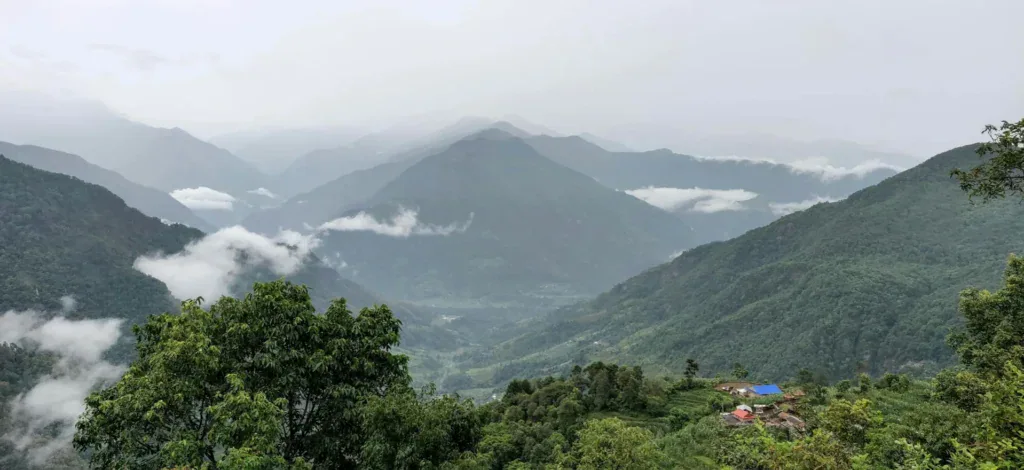
Kathmandu is worth it in every season. Our guides run walking tours to the temples, stupas and old royal squares every day, at 9 AM and 3 PM, in small groups or private.
See our walking tours →September or October?
This is the most common timing question we get, usually from people planning Annapurna Base Camp or another classic trek.
September: greener, quieter trails and lower prices, but the monsoon is still active. Kathmandu still averages 208 mm of rain and about 15 rainy days, and mountain views are a gamble. Late September is much better than early September.
October: the clearest, most stable weather of the year, and the busiest trails. Early October can still catch the tail of the monsoon, especially when withdrawal is late.
Our advice: if your dates are flexible, go from mid-October. If September is fixed, go as late in the month as you can and keep one or two spare days in your trek for bad weather.
Can you visit Nepal in the monsoon?
Yes, but plan for it.
- Kathmandu works well. Temples, squares and stupas are fine in the rain, and the valley is green and quiet. Rain often comes in the afternoon or evening.
- Fly between Kathmandu and Pokhara if you can. Landslides regularly block the highway. Sections of the Prithvi Highway have collapsed in past monsoons and stayed closed for weeks. Read our flood travel update and how to get from Kathmandu to Pokhara.
- Chitwan jeep safaris inside the national park stop for the monsoon and wildlife breeding season, typically from the end of June until around mid-September. Jeep safaris in the community forests of the buffer zone continue.
- Trekking is possible but wet. Expect leeches at lower altitudes, slippery trails and clouded views. Areas in the rain shadow north of the Annapurnas, such as Upper Mustang, get far less rain.
- Mountain views are rare. If seeing the Himalayas is the main reason for your trip, avoid June to mid-September.
Festivals and how they affect your trip
Nepal's biggest festivals follow the lunar calendar, so their dates move every year.
- Dashain (late September or October): the biggest festival of the year. Offices close for days, and buses and flights out of Kathmandu are packed as people travel home. Book transport early if your trip overlaps.
- Tihar (October or November, a few weeks after Dashain): the festival of lights, with oil lamps, marigold garlands and colourful mandalas outside houses. Most shops stay open.
- Maha Shivaratri (February or early March): thousands of pilgrims and sadhus gather at Pashupatinath.
- Holi (February or March): the festival of colours, celebrated a day earlier in the hills than in the Terai.
- Buddha Jayanti (April or May): Buddha's birthday, celebrated at Boudhanath and Swayambhunath.
Exact dates for the coming years are on our Nepal festival calendar.
Read more about why Kathmandu celebrates Holi a day earlier, or see Pashupatinath with a guide on our Pashupatinath and Boudhanath tour.
Best time for what you want to do
Trekking
October–November first, March–April second. For high passes such as Thorong La or Everest Base Camp, avoid December to February unless you're prepared for serious cold. Compare 14 treks in our Nepal Trek Finder. Check the permit and guide rules in do I need a guide to trek in Nepal.
Mountain views without trekking
October to February. Go for sunrise and stay overnight at the viewpoint. See Himalayan views without trekking. The Everest mountain flight is also at its most reliable in these months.
Kathmandu and culture
All year. October–November and February–March are the most comfortable. Monsoon months are wetter but quieter. Read our guide to the best weather to visit Kathmandu.
Chitwan wildlife
October to March is comfortable. It gets hot from April. Jeep safaris inside the park pause from around the end of June until mid-September. Where to stay: our hotels in Chitwan.
Fewer crowds and lower prices
Late November to February, and late September. You trade some cold or some rain for quieter trails and easier bookings.
Not sure which month fits your plans? Tell us your dates and what you want to see, and our guides will tell you honestly what to expect in that season.
Plan my trip →Frequently asked questions
What is the best month to visit Nepal?
October and November have the clearest mountain views and the most stable weather. March and April are the second-best window, with rhododendrons in bloom but more haze.
Is September a good time to visit Nepal?
Late September can be good, with green landscapes and fewer crowds, but the monsoon normally withdraws only around 2 October. Expect some rain and clouded mountain views, especially early in the month.
Can I visit Nepal during the monsoon?
Yes. Kathmandu works well in the rain, but roads are often blocked by landslides, mountain views are rare and jeep safaris inside Chitwan National Park pause from around the end of June to mid-September. Fly between Kathmandu and Pokhara if you can.
Is December too cold for Nepal?
Not for Kathmandu, Pokhara or lower treks: days are clear and mild, but nights are cold and many guesthouses have no heating. High passes can be snowbound and very cold.
When is it hazy in Nepal?
Mainly in spring. Most of Nepal's forest fires happen between late February and late May, which puts smoke in the air and softens mountain views, especially from mid-March.
When are Dashain and Tihar?
They follow the Nepali lunar calendar, so the dates change every year. Dashain falls in late September or October and lasts about 15 days, with the main days at the end. Tihar follows two to three weeks later, in October or November, and lasts five days. Exact dates for the coming years are on our Nepal festival calendar.
Sources: climate figures are World Meteorological Organization 1991–2020 normals for Kathmandu and Pokhara airports and Bharatpur (Chitwan). Monsoon onset and withdrawal dates: Department of Hydrology and Meteorology and Onlinekhabar. Chitwan safari closure: Onlinekhabar. Forest fire season: The Himalayan Times.
Main photo Machhapuchhre (Fishtail) on a clear day. October and November give the best chance of views like this, by Manik Acharya from Pixabay


1 thought on “Best Time to Visit Nepal: Month-by-Month Guide for Trekking, Mountain Views and Kathmandu”