Upper Mustang has been a restricted area since it opened to foreigners in 1992, with a special permit that has kept most visitors out. That may be about to end. Nepal’s Department of Immigration has started the process to lift the restricted status and asked the local governments of Upper Mustang for their opinion. The first of them has already said yes.
If you’re comparing treks for next year, keep Upper Mustang on your list. North of the Annapurna range lies Lo Manthang, the walled capital of the old kingdom of Lo, with whitewashed houses, red monasteries and sky caves cut into the cliffs around it. Fewer than 4,000 foreign visitors a year make it there, mainly because of the special permit: US$50 a day, so US$500 for a classic 10-day trek. If the restricted status goes, that permit goes with it. Here’s what a trip costs today and what would change.
What is happening with the restricted status?
On 28 September the Department of Immigration wrote to the District Administration Office in Mustang. It asked the office to collect recommendations from the rural municipalities in the restricted zone and report back on whether the restrictions should be reviewed. The letter arrived just before the Dashain and Tihar holidays, so the replies only started coming in this month.
The push comes from Upper Mustang itself. Local councils say the restricted status keeps tourists away and hurts hotels. It even slows down emergency evacuations. One council has formally asked for its villages to be taken off the list and Lo Manthang is expected to follow.
The final decision is up to the Department of Immigration in Kathmandu and needs a change to the rules, so no date has been set. Until then, the current permit applies.
Where does the restricted area start?
The restricted zone begins just north of Kagbeni, at 2,800 m (9,200 ft). It covers the whole upper valley up to the Tibetan border. That includes Chhusang, Ghami and Tsarang, the cave villages around Chhoser and Lo Manthang itself. Permits are checked at Kagbeni before you enter Upper Mustang. There are further security checks along the route, for example near Chele.
Jomsom, Kagbeni and Muktinath are outside the restricted area. For a visit to the Muktinath temple you only need the normal Annapurna Conservation Area Project (ACAP) permit. Our Muktinath and Mustang guide covers that trip.
How much does the Upper Mustang permit cost?
The Restricted Area Permit for Upper Mustang costs US$50 per person per day spent inside the restricted zone. What you pay therefore depends on how you travel. The classic Upper Mustang trek, on foot from Kagbeni to Lo Manthang and back, takes 10 to 12 days inside the zone. That is where the US$500 comes from. Since the government dropped the old 10-day minimum in late 2025, shorter trips by jeep cost less.
| Type of trip | Days inside Upper Mustang | Permit fee per person |
|---|---|---|
| By jeep there and back | 3 to 5 | US$150 to US$250 |
| Trek one way, jeep the other | 6 to 8 | US$300 to US$400 |
| Classic trek, on foot both ways | 10 to 12 | US$500 to US$600 |
On top of that you need the ACAP entry permit, which costs Rs 3,000 (about US$20) for foreigners. Buy it in advance: the same permit bought at a checkpoint along the route costs double.
What would change if the restriction is lifted?
Today a visit to Upper Mustang needs two permits: the normal ACAP permit and the special Restricted Area Permit. If the restricted status is lifted, the special permit disappears and Upper Mustang is treated like the rest of the Annapurna Conservation Area. For the classic 10-day trek that saves US$500 per person.
Some things stay the same. You would still need the ACAP permit and the Annapurna region’s rules on trekking with a licensed guide would still apply. The difference is the cost and the paperwork: no daily fee to the immigration department and no restricted-area application through an agency.
Do you need a guide for Upper Mustang?
Yes. A licensed guide is mandatory and the permit must be applied for through a registered trekking agency, which also takes responsibility for rescue if something goes wrong. Since 22 March 2026 you no longer need a second trekker: solo travellers are allowed in all of Nepal’s restricted areas, as long as they go with a licensed guide. One guide can take up to seven trekkers.
The agency applies for the permit online with the Department of Immigration. You need your passport and your Nepal visa details. Our article on guides and trekking permits in Nepal explains how permits work in general. Our page on entrance fees and trekking permits lists the other fees.
Why so few people go
Mustang as a whole gets more than 120,000 foreign visitors a year, most of them on the lower Annapurna Circuit, in Jomsom or at Muktinath. Lo Manthang counted only 3,872 foreign tourists in 2025, down from 4,093 in 2024. The permit is the main reason the gap is so large, which is exactly why the people of Upper Mustang want it gone.
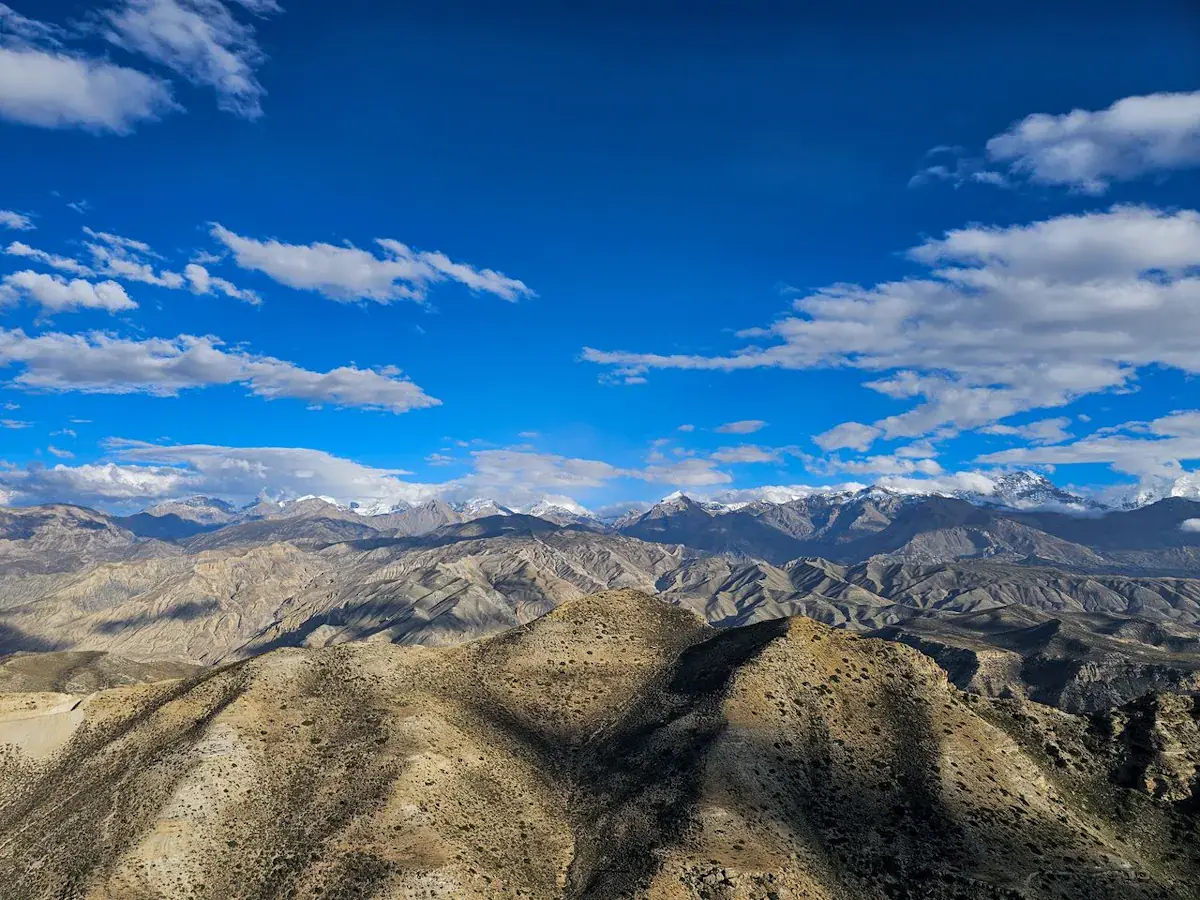
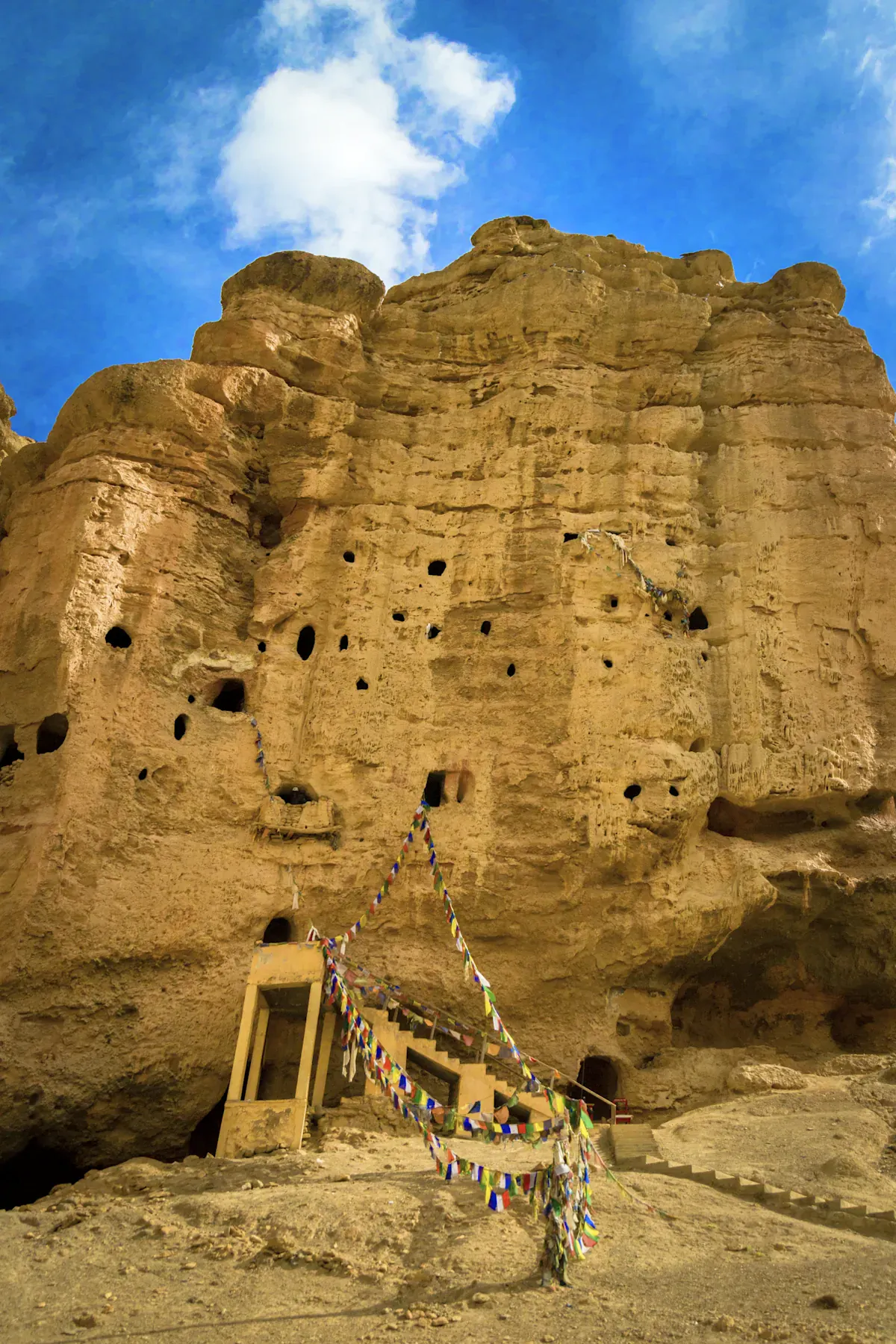
For a visitor that is also the attraction. Lo Manthang, at 3,880 m (12,730 ft), still feels like a medieval town. You walk through its gate into narrow lanes between whitewashed houses and red monasteries. The sky caves cut into the cliffs at Chhoser are centuries old. If the restriction disappears and the road is finished, that will change.
Getting there and when to go
Most visitors fly from Pokhara to Jomsom or drive up the Kali Gandaki valley, then continue on foot or by jeep through Kagbeni. A gravel road now runs from Jomsom to Lo Manthang, about 96 km (60 miles). Permit holders can go by jeep all the way to Lo Manthang and Chhoser with their guide. The Beni–Jomsom road was damaged by floods in September 2026 and reopened after repairs. Jeeps are running again, although some stretches are still rough. Mustang’s tourist numbers have not yet recovered.
The northern limit for foreigners is the police post at Nhechung near Chhoser. The Korala border crossing to Tibet is not open to foreign tourists.
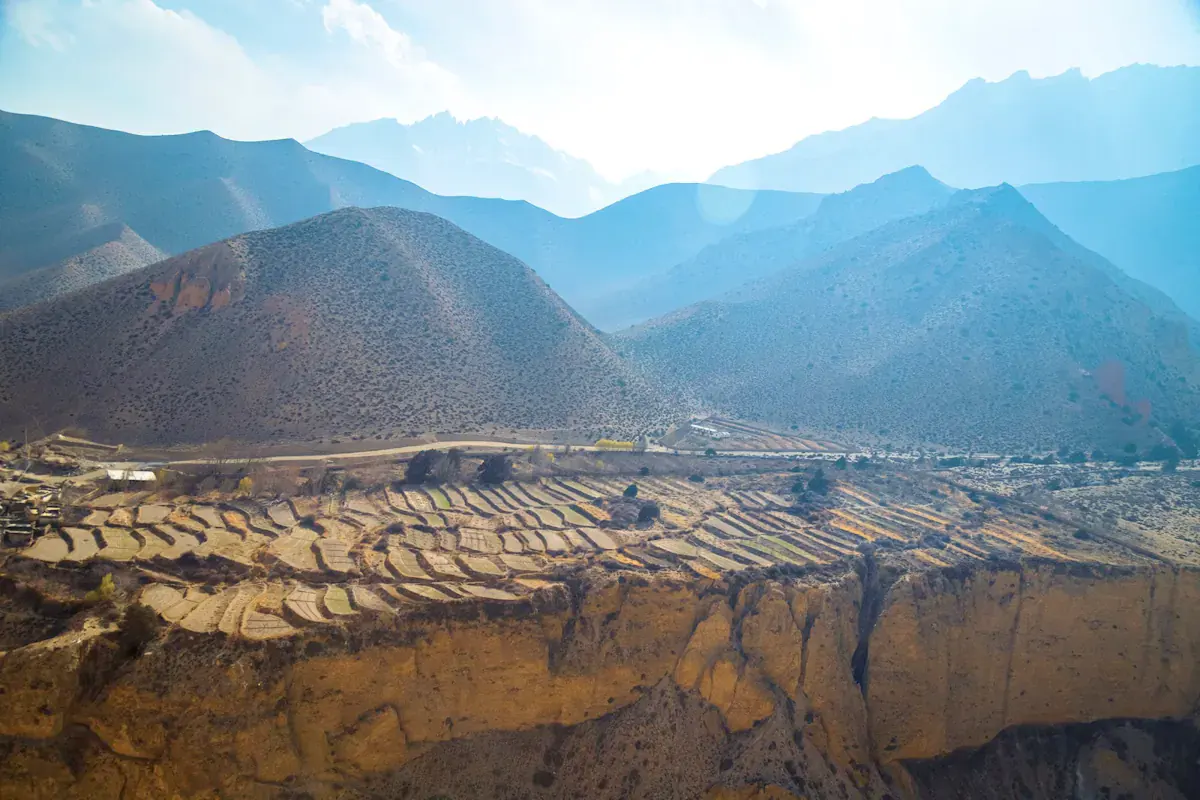
Upper Mustang lies in the rain shadow of the Annapurna and Dhaulagiri ranges, so it stays dry while the rest of Nepal has its monsoon. The season runs from April to October, with April and October the busiest months. The three-day Tiji festival in Lo Manthang falls in late April or May, depending on the Tibetan lunar calendar.
Should you wait for the restriction to be lifted?
We wouldn’t. There is no date for a decision and the change needs a new government regulation, which in Nepal can take a long time. If your trip is set for next year, keep an eye on it: the decision could save you US$500. And the quiet that makes Upper Mustang special is partly a result of the permit, so the years before the crowds arrive may be the best time to go.
Our motorcycle tour to Lo Manthang is one way to get there. For a trek, a jeep trip or a combination with Muktinath, send us a message on WhatsApp or fill in our travel planning questionnaire.
What you'll miss at every site without a local guide
A practical guide to Kathmandu's four UNESCO sites — what actually happens there that most visitors never understand. We'll also occasionally send tips and offers from Amazing Kathmandu Tours. Unsubscribe anytime.
No spam. Useful information. Unsubscribe anytime.
FAQ
How much is the Upper Mustang permit?
The Restricted Area Permit costs US$50 per person per day spent in the restricted zone. You also need the ACAP entry permit of Rs 3,000 (about US$20).
Is Upper Mustang still a restricted area?
Yes. In September 2026 the Department of Immigration started a review of the restricted status and local governments have recommended lifting it, but no decision has been made. The current permit rules still apply.
What changes if Upper Mustang is no longer a restricted area?
The special Restricted Area Permit of US$50 a day would disappear. You would only need the normal ACAP permit, as on the rest of the Annapurna Circuit. For the classic 10-day trek that saves US$500 per person.
Can I go to Upper Mustang alone?
Since 22 March 2026 solo travellers are allowed, but a licensed guide is mandatory and the permit has to be arranged through a registered trekking agency.
Do I need the Upper Mustang permit for Muktinath?
No. Muktinath, Jomsom and Kagbeni are outside the restricted area. You only need the ACAP permit.
When is the best time to visit Upper Mustang?
From April to October. Upper Mustang lies in a rain shadow, so it is also a good destination during the monsoon months.
Sources
- The Rising Nepal: Process to lift restricted area status of Upper Mustang begins (16 November 2026)
- Gorkhapatra: Upper Mustang restricted area review (15 November 2026, in Nepali)
- Ratopati: Upper Mustang to be removed from restricted area status (13 November 2026)
- The Kathmandu Post: Tourist arrivals in Mustang plunge 41.5 percent (19 October 2026)
- The Rising Nepal: Beni–Jomsom road reopens (9 October 2026)
- The Rising Nepal: Lo Manthang (8 April 2026)
- The Himalayan Times: Solo trekkers allowed in restricted areas with new permit rules (23 March 2026)
- Republica: Solo trekking now allowed in restricted areas, guide mandatory (23 March 2026)
- The Rising Nepal: Upper Mustang visitor figures (3 January 2026)
- The Kathmandu Post: Nepal scraps $500 Upper Mustang trekking fee for foreigners, sets $50 daily (20 November 2025)
- The Annapurna Express: Upper Mustang access and Korala (6 October 2025)
- National Trust for Nature Conservation: ACAP online permit
Main photo: The landscape around Lo Manthang in Upper Mustang, by Sagar Gnawali / Pexels