Kathmandu can feel intense within minutes of arrival. The traffic is loud, the streets can be uneven, temple squares are busy and Thamel pulls in everyone from backpackers to families to pilgrims. So is Kathmandu safe for tourists? Yes, in general it is and most visitors have a positive and trouble-free stay. But safe does not mean effortless. Kathmandu rewards travelers who stay alert, choose transport carefully and understand how the city works.
The question is not whether Kathmandu is dangerous in some dramatic, headline-making way. The better question is what kind of risks travelers actually face here. In Kathmandu, the bigger issues are usually traffic, petty scams, poor sidewalks, air quality, occasional political disruption and avoidable mistakes around valuables, nightlife or trekking logistics. Violent crime against tourists is not what shapes most trips. Street-level confusion and bad decisions are.
Is Kathmandu safe for tourists in practice?
For most travelers, yes. You can walk around heritage areas, visit temples, go out for dinner and explore the city without feeling under threat. Tourist neighborhoods such as Thamel, Boudha and Patan are used to international visitors and have hotels, restaurants, guides, shops and transport options built around them.
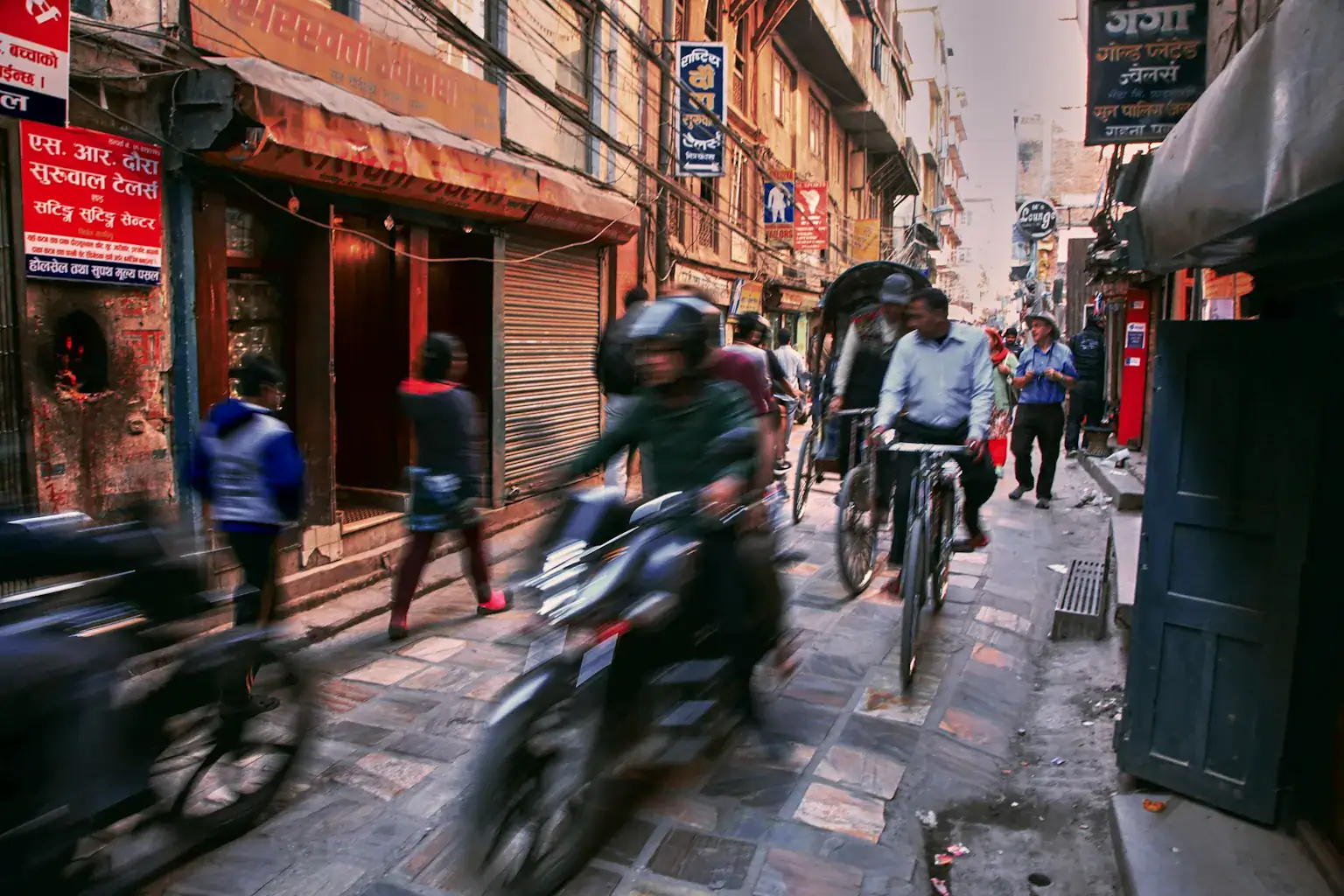
That said, Kathmandu is not a city where you switch off completely. Crossing roads takes patience. Sidewalks often disappear. Motorbikes come from angles you did not expect. During festivals or public holidays, some areas become more crowded and harder to navigate. If you arrive expecting a polished city system, Kathmandu may feel chaotic. If you arrive expecting a living South Asian capital with deep culture and a fast-moving street rhythm, it makes sense very quickly.
The most common safety issues visitors face
Traffic is the biggest day-to-day risk. Not crime. Not harassment. Traffic. Roads can be congested, crossings are not always respected and short walks can be more tiring than they look on a map. If you rent a scooter without experience in South Asian traffic, you are increasing your risk far more than if you simply use a driver, taxi or guide.
Petty theft can happen, especially in crowded areas, on busy streets and when travelers are distracted. Keep your phone secure, do not leave your bag hanging loosely behind you and avoid flashing cash. This is basic city travel advice, but it matters in Kathmandu as much as anywhere.
Scams exist, though they are usually low-level rather than sophisticated. You may run into inflated taxi fares, vague offers for tours, pressure to buy souvenirs or misleading claims about temples being closed so that someone can redirect you elsewhere. A calm no is usually enough. If you book guides, drivers or activities, choose known operators and confirm the details clearly.
Air pollution is another issue travelers underestimate. In dry months, dust and pollution can leave you tired, headachy or coughing, especially if you are sensitive or have asthma. That is not a safety threat in the same way as crime, but it does affect how comfortable and energetic you feel.
Safety for solo travelers and women
Solo travel in Kathmandu is common. You will see solo backpackers, photographers, students, researchers and older independent travelers across the city. The main safety rules are practical ones: know how you are getting back at night, avoid getting very drunk, share your hotel details with someone if you are meeting a new guide or driver and trust your instincts if a situation feels off.
For women, Kathmandu is manageable, but the experience depends on where you are, what time it is and how you move through the city. During the day, major sightseeing areas are generally straightforward. After dark, some streets are poorly lit and quieter than visitors expect, especially outside the busiest parts of Thamel. Unwanted attention can happen, particularly if you are walking alone late at night. It is usually more uncomfortable than dangerous, but it is still worth taking seriously.
If you want to experience the city with more confidence, structure helps. A guided walk, a trusted driver or a small group tour removes a lot of the guesswork. That is especially useful on your first day, when the city still feels unfamiliar.
Areas that feel easiest for visitors
Thamel is the classic tourist base for a reason. It is busy, central and full of hotels, restaurants and travel services. It can be noisy and chaotic, but it rarely feels isolated. If you want convenience, it works.
Boudha feels calmer and more spacious, especially around Boudhanath Stupa. Many travelers like it for a slower pace and a strong spiritual atmosphere. Patan is another excellent base if you prefer a more relaxed urban feel with easy access to heritage sites, courtyards and good restaurants.
No neighborhood removes all risk. What changes is the type of experience. Thamel gives you activity and convenience. Boudha and Patan give you more breathing room. For many visitors, that balance affects how safe they feel as much as the actual risk level.
Sacred sites are safe, but they require respect
Kathmandu’s major heritage and religious sites are among the safest places to visit because they are busy, visible and central to local life. They are also places where travelers can make avoidable mistakes by not understanding local customs.
At Pashupatinath, non-Hindus can enter the wider temple complex but not the main temple itself. At Buddhist sites such as Boudhanath and Swayambhunath, walk clockwise around the stupa. Dress respectfully, especially at active religious sites. Ask before photographing sadhus, cremation ghats or worshippers. Respect matters here. It improves your experience and reduces friction.
If you are budgeting for sightseeing, be clear about entry fees. Foreign visitor entry fees are NPR 1000 for Kathmandu Durbar Square, NPR 1000 for Patan Durbar Square, NPR 1000 for Pashupatinath and NPR 200 for Swayambhunath. Boudhanath is NPR 400. Carry Nepalese rupees for site entry because that makes the day easier.
Natural risks and disruption
Travelers often ask about earthquakes, strikes and monsoon conditions. Nepal does live with seismic risk, and Kathmandu still carries the memory of the 2015 earthquake. But this is not something that should stop most travelers from visiting. It should simply remind you to choose reputable accommodations and stay aware of emergency exits and local guidance.
Political strikes and demonstrations do happen from time to time. Most do not directly target tourists, but they can affect transport, opening hours and route planning. Monsoon season can bring flooding, muddy streets and slower travel. None of this means the city is unsafe in a blanket sense. It means flexibility matters.
How to stay safe without making your trip smaller
Kathmandu is best enjoyed with confidence, not paranoia. Book your first airport transfer or have a clear plan on arrival. Use registered taxis or a known driver. Keep copies of your passport and visa separately from the originals. Choose accommodations with strong recent reviews in areas that match your travel style. Drink bottled or filtered water and be selective with food if your stomach is sensitive during the first days.
It also helps to accept that orientation takes time. Distances can look short and still take longer than expected. A guided introduction to the city often saves time and removes stress, especially if you want to understand the old city, temple etiquette and local transport from the start.
We run daily tours to Kathmandu’s main heritage sites at 9 am and 3 pm, each lasting 3 hours. Small group tours cost US$20 per person with a maximum of 5 participants, and private tours cost US$80. For many travelers, that is the easiest way to get grounded quickly, especially if safety and local context matter as much as seeing the landmarks.
So, is Kathmandu safe for tourists?
Yes, for most travelers it is. Kathmandu is not a city that asks you to be fearful. It asks you to be aware. If you treat traffic seriously, keep your valuables close, avoid random travel arrangements and move through the city with a bit of local guidance, you are likely to find Kathmandu not only safe enough to visit but deeply rewarding to experience.
The best trips here come from understanding the city on its own terms. Once you do, the noise fades into rhythm, the streets start to make sense and Kathmandu becomes far easier to trust.
Photo by Colin Hobson on Unsplash