Don’t ride an elephant in Chitwan. Not a short ride, not a “gentle” one, not because it happens to be in your package. An elephant’s back is not built to carry a saddle full of tourists. Nepal’s own Supreme Court said so in December 2025. Handlers beating elephants have been filmed in Sauraha more than once. Elephant rides are a disgrace for Nepal and every ride sold keeps them going.
Amazing Kathmandu Tours doesn’t sell elephant rides and never puts one in an itinerary. Below: where rides are still sold, how they end up in packages, what the court ruled and what to do in Chitwan instead.
Why elephant rides are a no
An elephant’s spine, legs and body did not evolve to carry people. That isn’t an activist slogan. It is point 48 of the Supreme Court’s order of 17 December 2025. The court wants elephant safaris and chain tethering replaced by elephant walks and observation-only visits.
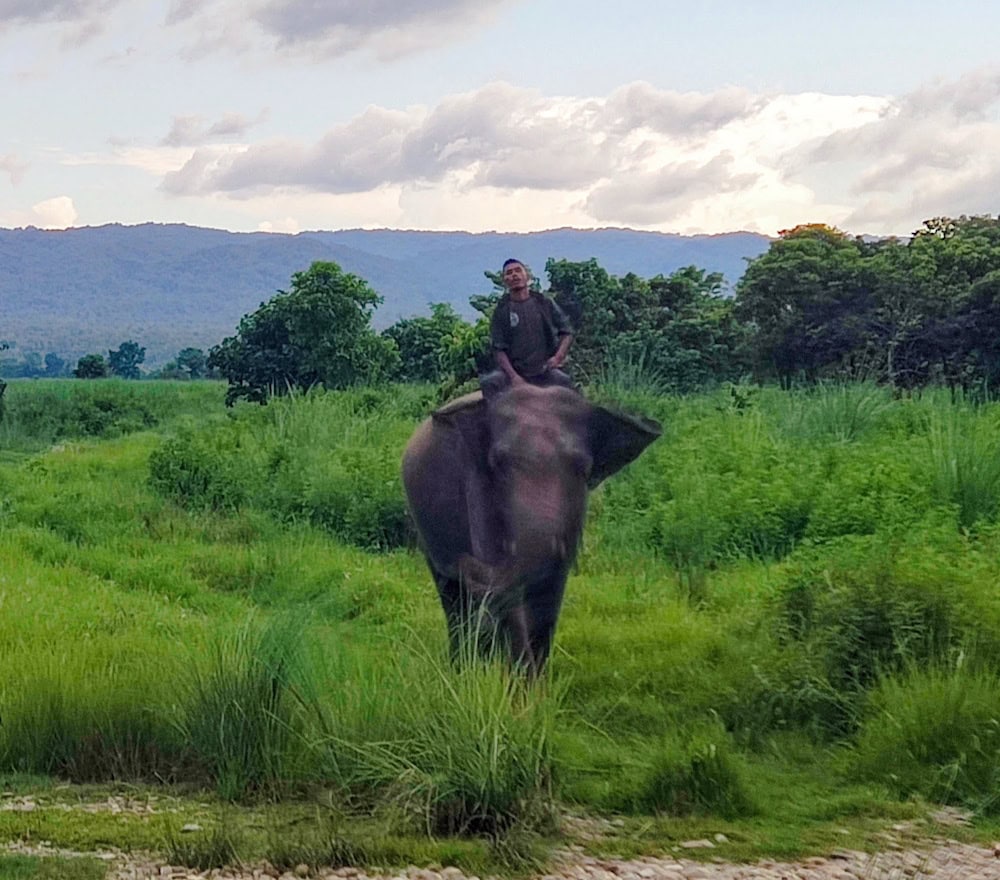
That is about tourist rides. Chitwan National Park’s rangers still go out on elephants, one man on the elephant’s neck, to patrol jungle and tall grass that no jeep can get through. They use them for anti-poaching work and wildlife monitoring. That is not the same as selling rides for fun. Even so, it is under debate now that jeeps and drones do more of the job.
Then the handling. World Animal Protection published videos from the Chitwan Elephant Festival of December 2024: elephants with visible cuts, handlers beating them during the games. In November 2026 People for the Ethical Treatment of Animals (PETA) released new footage it says was shot at the festival. In it one handler jabs, kicks and beats an elephant 64 times. From a seat on an elephant’s back you see none of that. Your money pays for it anyway.
You lose nothing by skipping it. Rhinos, crocodiles and birds are seen from jeeps, canoes and on foot every day. Tigers too, if you’re lucky.
Where elephant rides are still sold
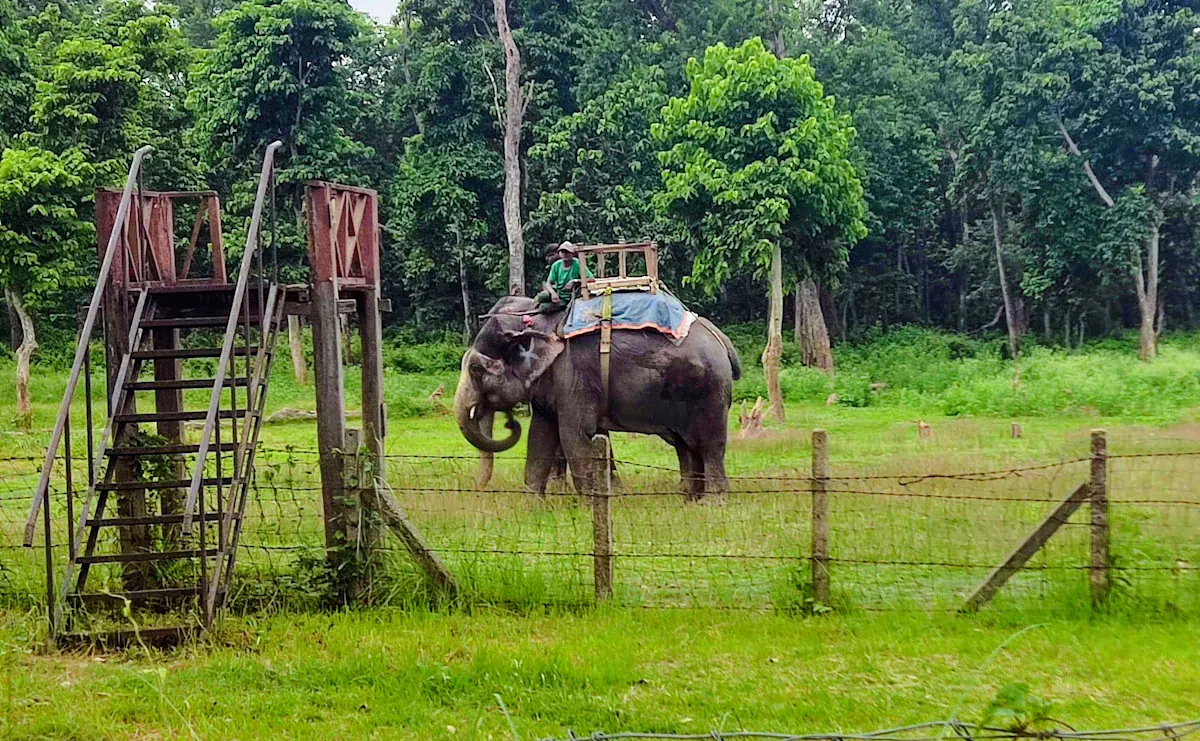
When a hotel or agent in Sauraha offers an “elephant safari”, this is what it means: a ride on a privately owned elephant through the buffer zone, the belt of community forests around the national park that local user groups manage. Most rides go into Baghmara Buffer Zone Community Forest, 215 hectares (530 acres) of forest on the edge of Sauraha, the village where most visitors stay.
Sometimes the ride is already in the itinerary. Some Chitwan packages list an “elephant safari” among the standard activities. Travellers who booked them often don’t realise it until they are in Sauraha. Before you book, read the Chitwan days of your itinerary line by line. If an elephant safari or elephant ride is on it, ask for a jeep safari, a canoe trip or a guided walk instead.
The elephants belong to private owners, most of them members of a cooperative. Their number is falling fast. Dipendra Khatiwada, who heads the owners’ cooperative, says Sauraha’s private herd has dropped from about 90 elephants to about 45. On busy days 38 to 40 of them still work.
Rides have not been allowed inside Chitwan National Park itself for about 15 years. The park’s own elephants belong to the government and work for the rangers on patrols, research and anti-poaching duty in jungle and tall grass where jeeps cannot go.
What Nepal’s Supreme Court ruled
The case began in September 2021, when advocate Sanjay Adhikari and other campaigners asked the Supreme Court to end cruel treatment of captive elephants. On 17 December 2025 Justices Hari Prasad Phuyal and Tek Prasad Dhungana issued a 62-point order. The full text went up on the court’s website on 16 July 2026.
Besides points 48 and 51 on rides and safaris, the order deals with registering captive elephants, ending unnecessary chaining and setting up retirement centres for old animals.
What it does not do is ban rides outright or set a deadline. That gap is why rides are still on sale. The Department of National Parks and Wildlife Conservation (DNPWC) says it will implement the directives while weighing the concerns of elephant owners. Dil Bahadur Purja Pun, chief conservation officer of Chitwan National Park, has asked owners to make the change gradually and in step with the park authorities.
Why the rides have not disappeared yet
Money. An adult elephant is worth Rs 10 million to Rs 15 million (about US$65,000 to US$98,000). Feeding and caring for one costs Rs 100,000 to Rs 120,000 (about US$650 to US$785) a month. An owner who has bought an elephant needs it to earn.
The community forests depend on the income too. At its peak Baghmara earned about Rs 30 million (about US$196,000) a year, roughly a third of it from elephant safaris. Seven or eight community forests around Sauraha lean heavily on safari money.
People depend on it as well. Every elephant needs at least two full-time handlers. One is the mahout, who trains the elephant and rides on its neck to steer it. The other is an assistant called a phaneta. Jayalal Das, 48, has worked as a mahout in Sauraha for 18 years. His family of six lives on his income, he told the Kathmandu Post in August 2026.
Is anyone compensated if the rides stop?
No. The Supreme Court ordered retirement centres for old elephants and a move to elephant walks. Nobody has put money on the table for it. No compensation, buy-out or subsidy for owners, mahouts or community forests has been announced by the government, DNPWC or the park. DNPWC has only said it will implement the court’s directives.
The owners say they are ready for sanctuaries and bush walks as long as the change is phased. Their cooperative proposes letting healthy elephants work a few more years while sanctuaries take in old, sick and injured animals. Its president warns that a sudden ban without financial support will end with elephants being abandoned. Community forest leaders want land at the forest edge where the elephants can be kept together.
That is a fair demand and the government has to answer it. It is not a reason to buy a ride. A jeep safari, a canoe trip or a guided walk keeps money coming into Sauraha without anyone sitting on an elephant.
The elephant festival under pressure
The ruling has also caught up with the Chitwan Elephant Festival, held in Sauraha every December. In November 2026 People for the Ethical Treatment of Animals (PETA) released footage it says shows handlers beating elephants during the festival’s football games. Several sponsors, including Machhapuchchhre Bank, then withdrew. The full story is in our Chitwan Elephant Festival update.
What to do in Chitwan instead
Chitwan is one of the best places in Asia to see the one-horned rhino. Nepal’s 2026 census counted 429 tigers. None of the ways to look for them involves sitting on an elephant.
Jeep safari
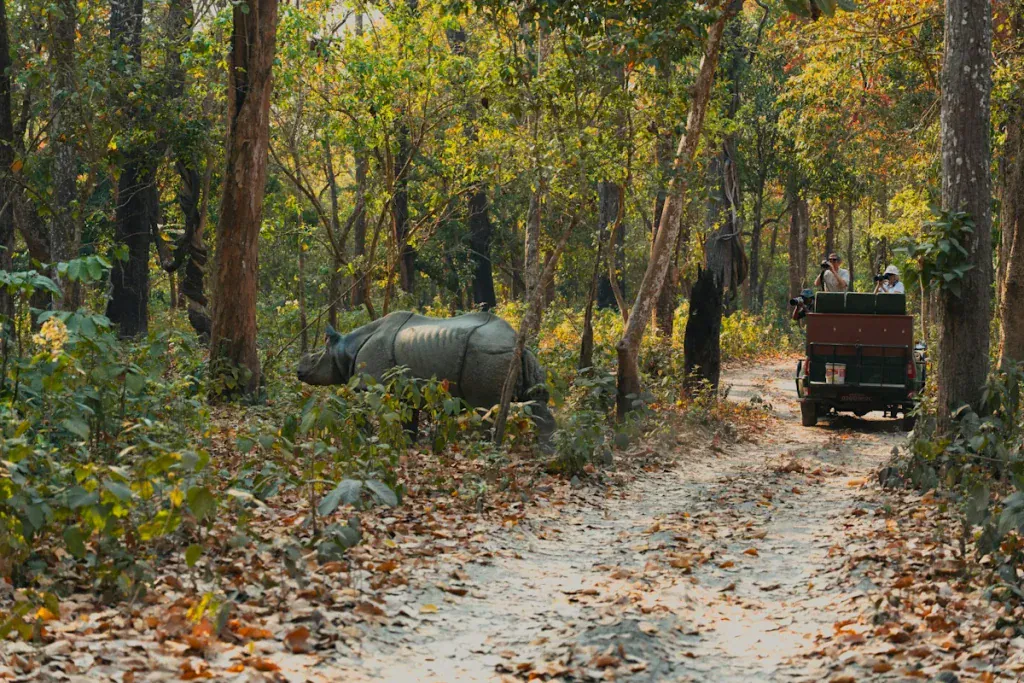
On a two- or three-night stay a jeep is the way to cover the most ground. Open jeeps follow the forest roads and grassland tracks with a nature guide on board.
Canoe on the Rapti River
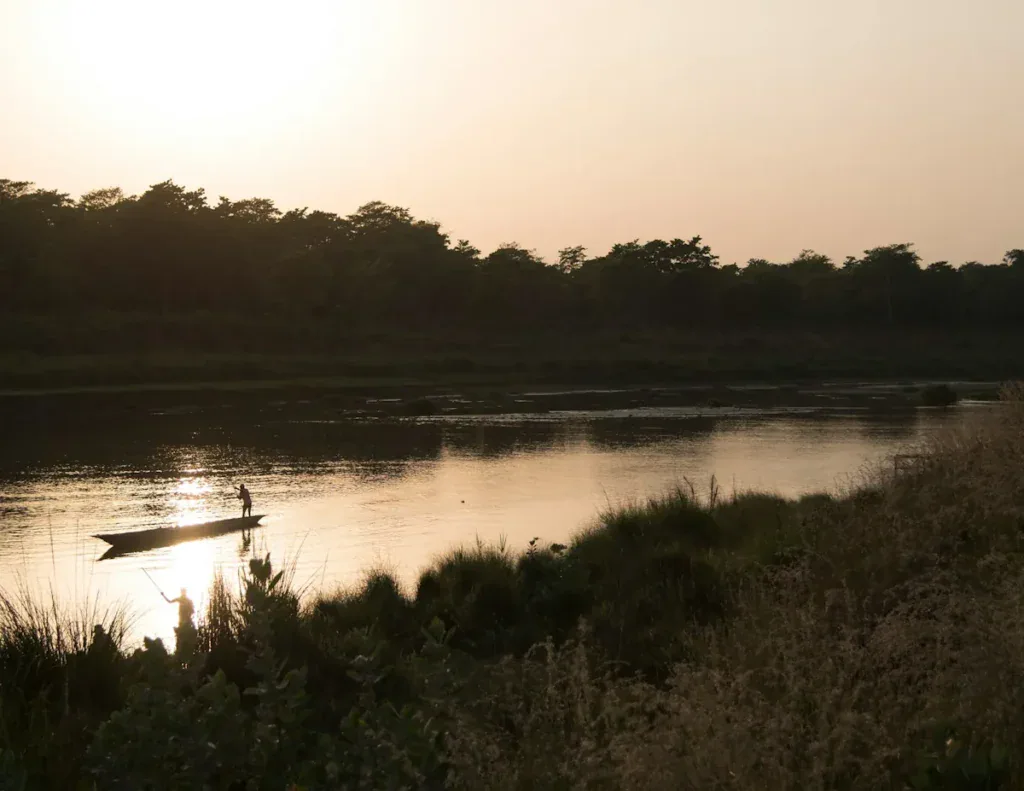
Wooden canoes drift down the Rapti River from Sauraha. It is a quiet way to watch birds and look for crocodiles on the banks, with the park on one side of the river.
Elephant Breeding Centre
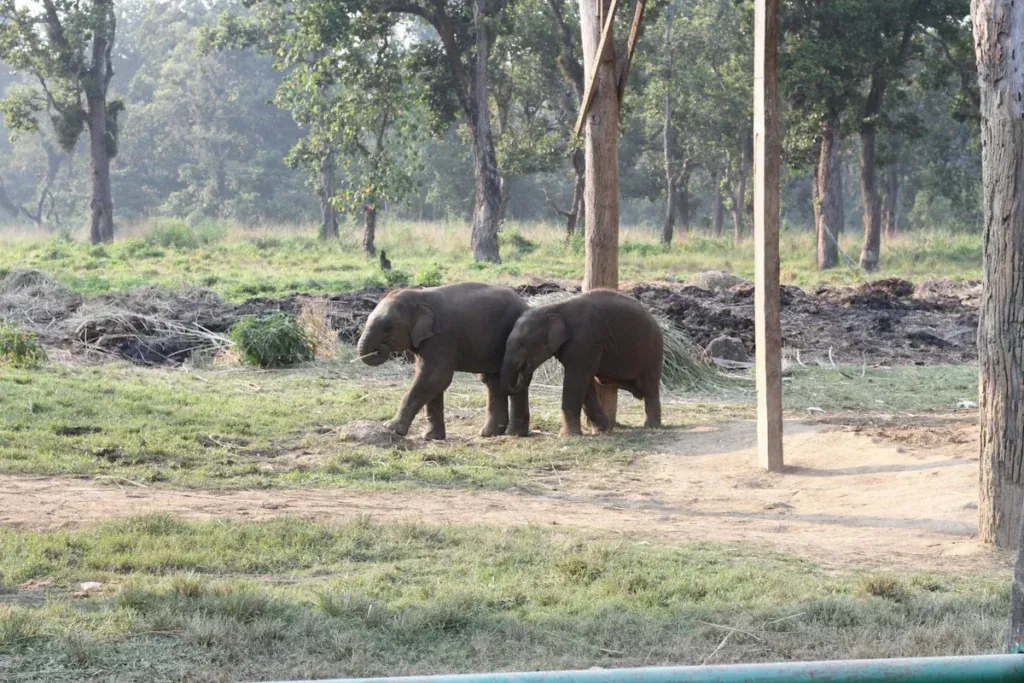
The park’s Elephant Breeding Centre at Khorsor, near Sauraha, is where government elephants are bred and trained. It started in the late 1980s with 20 elephants brought from India, Thailand and Myanmar. By July 2025, 68 calves had been born there.
Walking and cycling
A walk in the park with a licensed nature guide brings you closest to the jungle. Around Sauraha a mountain bike ride goes through villages of the Tharu (the Indigenous people of Nepal’s southern lowlands) and along the park edge. On the way you often pass elephants cared for by park staff or private owners. See cycling in Sauraha and Chitwan National Park.
Elephant rides in Chitwan: FAQ
Can you still ride an elephant in Chitwan?
Yes, but not inside Chitwan National Park, where rides have not been allowed for about 15 years. Privately owned elephants still carry tourists through the community forests of the buffer zone around Sauraha, mainly Baghmara. Our advice: don’t.
Are elephant rides banned in Nepal?
No. Nepal’s Supreme Court ruled on 17 December 2025 that tourist rides must be reconsidered on animal welfare grounds. It wants elephant safaris replaced by elephant walks and observation-only visits. The order sets no ban and no deadline.
Is an elephant safari in Chitwan ethical?
No. An elephant’s back is not built to carry a saddle full of tourists. Handlers beating elephants have also been filmed at the Chitwan Elephant Festival more than once.
What can you do in Chitwan instead of an elephant ride?
Take a jeep safari or a canoe trip on the Rapti River. You can also walk in the park with a licensed nature guide, visit the Elephant Breeding Centre at Khorsor or cycle through the Tharu villages around Sauraha.
Do park rangers in Chitwan still ride elephants?
Yes. Rangers use government elephants for patrols, anti-poaching work and wildlife monitoring in jungle and tall grass that jeeps cannot reach. That is work, not a tourist ride.
What is a mahout?
A mahout trains and looks after an elephant and rides on its neck to steer it. In Nepal every working elephant also has an assistant handler called a phaneta.
Are elephant owners compensated if the rides stop?
Not so far. No compensation, buy-out or subsidy for owners, mahouts or community forests has been announced by the government, the Department of National Parks and Wildlife Conservation (DNPWC) or the park.
Does Amazing Kathmandu Tours offer elephant rides?
No. None of our trips includes an elephant ride. Our Chitwan days include a jeep safari, a canoe ride, a visit to the Elephant Breeding Centre and a Tharu stick dance.
Chitwan with Amazing Kathmandu Tours
No elephant rides on our trips. Our 7-day Culture & Wildlife journey and 11-day Nepal Highlights round trip both include a jeep safari and a canoe ride in Chitwan National Park, a visit to the Elephant Breeding Centre and a Tharu stick dance in Sauraha. The 11-day trip adds a mountain bike tour. Both fly from Kathmandu to Bharatpur, the airport for Chitwan.
Hotel options are in our Chitwan hotel guide and park fees on our Nepal entrance fees page. Questions about Chitwan or a Nepal round trip? Join the free Discover Nepal live Q&A on Zoom or message us on WhatsApp at +977 98 08 31 32 79.
Main photo: An elephant saddled for tourist rides beside the mounting platform in Chitwan. Photo: Amazing Kathmandu Tours