Pokhara is about 125 miles from Kathmandu, but the road crosses hills, river valleys and some of Nepal’s busiest highways. The time difference between flying and driving is only a few hours, but the real risk is disruption, not the base travel time. During monsoon, landslides can close the highway for a day or two with no warning. Flights get delayed or cancelled in bad weather, and delays stack up through the day, so a morning flight has a backup option if it’s cancelled and a last flight of the day does not. Plan around that, not just around how many hours the trip takes on a good day.
How you make the trip also depends on where you’re headed next. Pokhara is your gateway to the Annapurna region, a trek toward Gandruk or a first close look at the Himalaya. Most travelers spend a few days in Kathmandu first, seeing sites like Kathmandu Durbar Square, Swayambhunath and Pashupatinath and Boudhanath, before heading onward.
Four options cover almost everyone: a flight, a tourist bus, a private jeep or car with a driver, or a self drive rental. Each suits a different traveler.
The options at a glance
Flying takes around 25 minutes in the air. A tourist bus takes seven to nine hours. Hiring a private car or jeep with a driver takes six to eight hours and lets you set your own pace. Renting a car and driving yourself is also possible with the right documents.
Flying from Kathmandu to Pokhara
Flights leave the domestic terminal at Tribhuvan International Airport in Kathmandu and land at Pokhara International Airport. Several Nepali airlines run the route throughout the day. The flight itself takes about 25 minutes, and on a clear day you get a strong view of the Himalaya, including the Annapurna range, from the window.
Add hotel transfer, check in, security and the wait for boarding, and the full door to door journey usually runs four to five hours. Fly if your Nepal itinerary is short, if you are heading straight into a trek and want to save your energy for the trail, or if you get carsick on winding roads.
Weather affects domestic flights, particularly in the monsoon and on foggy winter mornings. Delays and cancellations happen, and they happen more as the day goes on, since a morning weather delay pushes every later flight back too. Book an early flight, not the last one of the day. If your last flight is cancelled, you’re stuck overnight in Kathmandu with no fallback. If you have a tight connection out of Pokhara, especially the start of a trek departure, build in a buffer day rather than flying in the same morning.
Foreign travelers commonly pay around US$90 to US$140 one way. Baggage allowances on domestic routes are tighter than international flights, so check your allowance before packing trekking gear.
Tourist bus from Kathmandu to Pokhara
The tourist bus is the standard overland choice for international visitors and backpackers heading to Pokhara before a trek. Most depart in the morning around 7:00 AM from Sorhakhutte near Thamel. Your operator confirms the exact meeting point when you book.
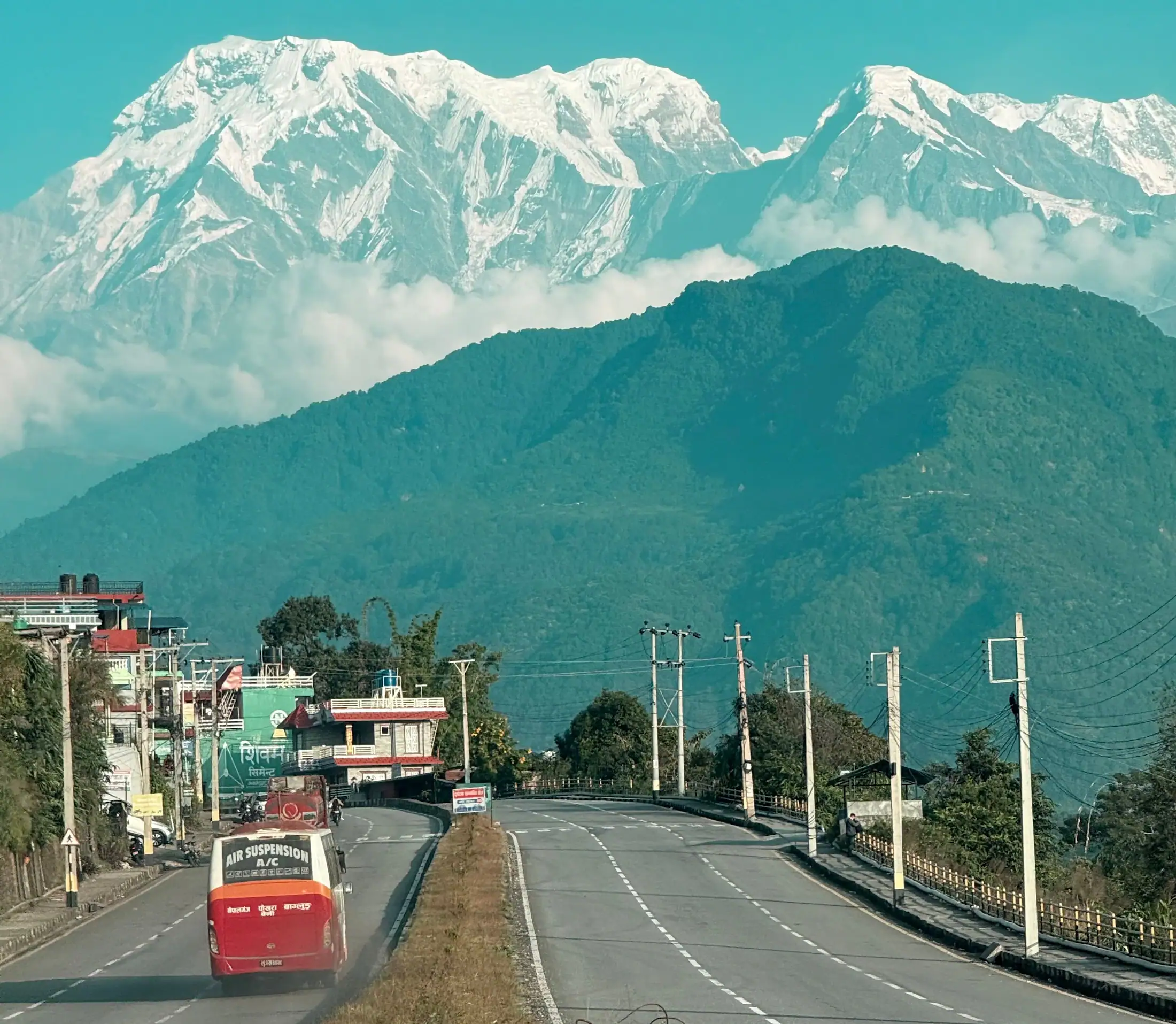
The road follows the Trishuli River for long stretches before climbing toward Pokhara, passing small towns, terraced fields and roadside markets on the way to the Annapurna foothills. Journey time usually runs seven to nine hours, longer during monsoon, on holidays or when roadwork slows the highway.
Standard tickets run US$10 to US$20. Premium or deluxe sofa style buses cost more, often US$20 to US$30 or higher depending on season. Sections of the Prithvi Highway are narrow and busy with trucks and motorcycles, so this is not a smooth sightseeing ride. Sit near the front if you get motion sick and keep medication within reach.
Local bus from Kathmandu to Pokhara
The local bus is the cheapest option and the one we recommend least for most international travelers. It is more crowded, less comfortable and less predictable around departure points and seat availability than the tourist bus. If your budget is the deciding factor, it exists. Otherwise, take the tourist bus instead.
Private car or jeep with a driver
Hiring a private car or jeep with a driver does not make the journey shorter than the bus, but it makes it easier to manage. You set your own departure time, stop for photos or lunch when you want, and skip the bus park entirely. Expect six to eight hours in normal conditions, longer with delays.
This is the strongest option for couples, families with children, small groups, or anyone heading straight to a trekking departure point for the Annapurna Circuit, Annapurna Base Camp or Gandruk. For two or more travelers, the cost per person starts to compare well with flying, especially once you factor in the flexibility. We arrange private transport as part of a tailored Nepal itinerary.
Renting a car and driving yourself
Self drive rental is legal for foreign tourists in Nepal. You need a valid International Driving Permit alongside your home country license, and most rental companies set a minimum age of 21 to 23. Rentals typically run on a manual transmission, so specify if you need automatic. A credit card is required for the security deposit.

Nepal drives on the left. The real challenge is not the mountain road to Pokhara, it’s getting out of Kathmandu. City traffic is congested and unpredictable, with few working traffic lights, constant horn use and vehicles, pedestrians and animals sharing the same space with little separation. That’s where most self drive travelers struggle, not the open highway. Once clear of the city, the road toward Pokhara is narrow and winding, shared with trucks, motorcycles and livestock, but at least it moves. If you’re comfortable navigating Kathmandu’s traffic first and want full control over your route and stops after that, self drive is an option. If you’d rather skip that entirely, hire a car or jeep with a driver instead.
Which option fits your trip
Fly if your time in Nepal is short or you are heading straight into a trek and want to arrive with energy to spare. Take the tourist bus if you want the lower cost and do not mind a long day on the road. Hire a private car or jeep with a driver if comfort and control matter more than price, particularly with a family or a fixed trek departure point in the Annapurna region. Rent a car yourself if you want full control of the route and are prepared for mountain driving. Skip the local bus unless saving a few dollars outweighs comfort and predictability.
Timing your departure and the monsoon risk
Leave early. Tourist buses depart around 7:00 AM because afternoon departures run into worse traffic and less daylight. Flights also tend to run more reliably earlier in the day, since weather conditions are usually better in the morning. If you are driving, a 6:30 or 7:00 AM start beats leaving after Kathmandu traffic builds up.
Monsoon season, roughly June through September, is the real wildcard. Heavy rain can trigger landslides on the highway between Kathmandu and Pokhara, closing the road for a day or two with little warning. Flights are affected too, since low cloud and poor visibility ground planes more often in this period. If you’re traveling in monsoon season, build a spare day into your schedule on either side of the journey rather than booking a same-day trek departure or onward flight right after arriving.
What to carry
Carry cash for roadside stops and small purchases. Keep water, medication, a layer for air conditioning and your valuables in a day bag rather than packed away in the hold. If you are flying, reach the domestic terminal with time to spare, since weather and airport processes are not always predictable.
Book ahead
Book flights in advance, especially in peak trekking season from October to November and March to April. Tourist buses can sometimes be arranged at short notice, but booking early gets you a better seat and a wider choice of operator. Arrange a private car or jeep ahead of time too, particularly if you need a confirmed departure for a trek start.
Our take
Fly if time matters most. Take the tourist bus for the best value. Hire a private car or jeep with a driver if comfort and control matter more than price, especially heading into the Annapurna region or on to Gandruk. Rent a car yourself only if you’re confident on mountain roads and have your IDP sorted. Skip the local bus unless the savings are worth the extra friction. Whichever you choose, build in room for delays. This is still Nepal, and the road to Pokhara rewards travelers who leave space in the plan.
If you are still deciding how to spend your days in Kathmandu before heading to Pokhara, see our small group and private tours or read what past travelers say on our TripAdvisor reviews page.